What Counts as Obscure Right Now
This list leaves out 2026’s new wave of AI-agent browsers, including Perplexity’s Comet, The Browser Company’s Dia, and the from-scratch Ladybird project, since all three have already had extensive mainstream tech coverage this year. It also leaves out browsers that dominate specific regions but feel unfamiliar to a US audience: obscurity is relative to where you’re browsing from. What follows are four projects with small, checkable user bases and public development histories, not vendor claims about how hidden they are.
Pick the Right One for What You Need
| If you want… | Pick | Why | Key caveat |
|---|---|---|---|
| Full keyboard-only navigation | Nyxt | Built around fuzzy-search tab switching and Lisp-based scripting instead of a mouse-first UI | No official Windows build; WSL only |
| A Firefox base with the widest current extension access | Floorp | Added Chrome-extension installs in version 12.11.0, on top of native Firefox add-ons | Smaller install base than Firefox means slower third-party testing |
| Native KDE and Linux desktop integration | Falkon | Built and maintained by KDE; default browser on KaOS and openMandriva | No mobile build, no bookmark or tab sync across devices |
| Legacy XUL extensions on older hardware | Pale Moon | Kept support for XUL-era extensions and themes modern Firefox dropped | Runs its own Goanna engine, patched on a delayed audit cycle |
The split isn’t privacy against speed. It comes down to how much of the mainstream extension and sync ecosystem each project gives up in exchange for its specialty.
Maintenance and Security Snapshot
| Browser | Engine | Latest confirmed activity | Platform limitation |
|---|---|---|---|
| Floorp | Firefox and Gecko | Version 12.11.0 shipped 13 March 2026, adding Chrome-extension support | Windows, macOS, Linux |
| Falkon | QtWebEngine and Chromium | Version 25.12.1 released 8 January 2026, continuing a steady point-release cadence | Windows and Linux only, no mobile build |
| Nyxt | WebKit, with experimental Blink support | Listed by its maintainers on GitHub as under active development, no fixed version cited here | No official Windows build; WSL only |
| Pale Moon | Goanna, a Gecko fork | Version 34.3.1 patched three newly disclosed CVEs | Windows and Linux |
Falkon’s release cadence looks healthy on paper, several point releases a year since 2024, but a 2024 review of the browser found bug-tracker activity thin enough to suggest the maintenance is closer to upkeep than active feature development.
Has Nyxt had serious security problems before? A comparison page maintained by the rival qutebrowser project cites a critical remote-code-execution report against Nyxt from 2019 and describes the response to it as poor. No independent CVE record for that report turned up in this research, so treat the claim as reported, not independently verified.
Floorp: A Firefox Fork That Just Added Chrome Extensions
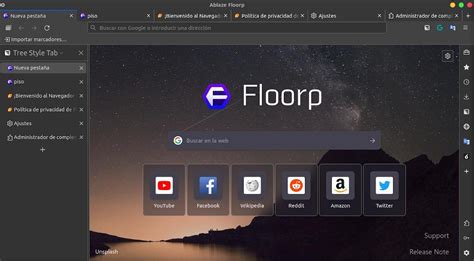
Floorp is a Firefox-based browser built in Japan, and as of version 12.11.0 it can install Chrome Web Store extensions directly, on top of its native Firefox add-on support. That single change is the clearest evidence in this list that a niche browser is still evolving instead of coasting on its original feature set.
Why did Floorp add Chrome-extension support? The change, shipped in version 12.11.0 on 13 March 2026, broadens the browser’s available extension pool beyond Firefox’s add-on catalog, without dropping native Firefox extension support.
Nyxt: Browsing Without a Mouse
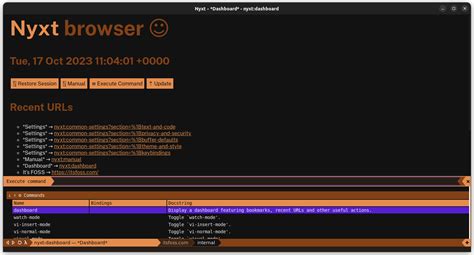
Nyxt is a keyboard-driven browser written in Lisp, and it is described by its maintainers as under active development rather than finished software. Instead of clicking links, you type a few matching letters and Nyxt jumps to the tab or link you meant; instead of installing a standard extension, you write or load a Lisp script that changes how the browser behaves.
Does Nyxt run on Windows? Not officially. The project’s download page states that Windows isn’t officially supported yet, that a native port is in development, and that the only current way to run Nyxt on Windows is through WSL.
Falkon: KDE’s Browser, With Real Gaps
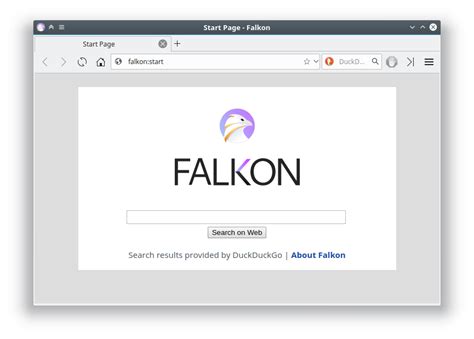
KDE maintains Falkon, built on QtWebEngine, and it ships as the default browser on KaOS and openMandriva. It gets regular point releases, 25.12.1 landed on 8 January 2026, but a detailed 2024 review found no bookmark or tab sync between devices, no mobile build at all, and a bug tracker quiet enough to suggest the project runs on a small team.
Can Falkon sync bookmarks between my desktop and phone? No. Falkon has no mobile version and no built-in mechanism for syncing bookmarks, history, or open tabs across devices, a gap confirmed in an in-depth 2024 review of the browser.
Pale Moon: Old Extensions, a Delayed Patch Cycle, and One Real Incident
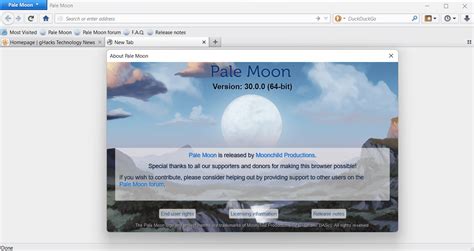
Pale Moon doesn’t run stock Firefox code. It runs Goanna, its fork of Gecko, which is why it can still install XUL-based extensions and themes that modern Firefox abandoned years ago. The maintainer has explained the security process directly: after each Firefox release cycle, Mozilla’s disclosed vulnerabilities get audited one by one, and whichever apply to Pale Moon’s code get patched on that trailing schedule instead of continuously. Version 34.3.1 addressed three new CVEs under that process.
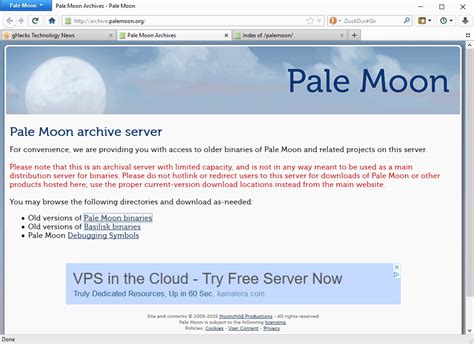
In 2019, Pale Moon’s own archive server was breached, and every installer stored there was altered to drop malware ESET tracked as Win32/ClipBanker.DY; the earliest tampered files dated back to 27 December 2017, and the browser reported 750,000 to 1.25 million users at the time.
Is Pale Moon still receiving security updates? Yes, but on a lag: fixes arrive after the maintainer reviews each Firefox security cycle for applicability, not continuously, and version 34.3.1 shipped three CVE fixes under that process.
What happened when Pale Moon’s download server was hacked? In 2019, attackers compromised the archive server hosting older Pale Moon installers and inserted a trojan downloader; the tampering traced back to files as old as December 2017, and only installers pulled from that specific archive server were affected.
Where the Extension Systems Diverge
| Browser | Extension system | Practical effect |
|---|---|---|
| Floorp | Native Firefox WebExtensions, plus Chrome extensions since v12.11.0 | Widest extension access of the four |
| Falkon | A small first-party plugin system built for QtWebEngine | Far fewer available extensions than mainstream stores |
| Pale Moon | Legacy XUL-based extensions and themes only | No modern WebExtensions-format add-ons will install |
| Nyxt | No traditional extension store; behavior is scripted directly in Lisp | No ecosystem to depend on, but a steeper learning curve |
Floorp is the only one of the four that expanded its extension access this year instead of just maintaining it.
Common Mistakes When Adopting One of These

- Assuming full extension parity. Pale Moon can’t install anything built for the modern WebExtensions format, and Falkon’s plugin catalog is a fraction of Chrome’s or Firefox’s.
- Treating an infrequent patch cycle as no patch cycle. Pale Moon still ships CVE fixes, just on a delay tied to Mozilla’s disclosure schedule.
- Expecting mobile or cross-device sync by default. Falkon has neither; Nyxt has no official Windows build at all.
- Downloading installers from mirrors instead of the official project site. Pale Moon’s 2019 incident happened on its own archive server, which is exactly why sticking to current, official download channels matters more with a small project than a large one.