The Smartphone Shift: BlackBerry’s Peak and the iPhone’s Takeover
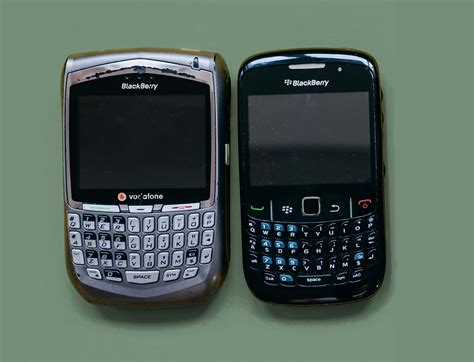
BlackBerry controlled the US smartphone market for most of the 2000s, and lost that position within about seven months of a specific 2011 crossover point. Apple’s original iPhone launched on June 29, 2007, priced at $499 for the 4GB model and $599 for 8GB, both tied to a two-year AT&T contract. It sold 270,000 units domestically in its first week and reached one million units sold within 74 days of release.
BlackBerry kept growing for three more years after that launch: in September 2010 it still held 37 percent of the 58.7 million American smartphones then in use, its actual US peak. Apple’s installed base did not pass BlackBerry in the US until April 2011.
The mechanism behind that four-year gap between launch and crossover: BlackBerry’s advantage was a physical keyboard and secure enterprise email, a narrow, defensible niche. The iPhone’s advantage only fully arrived a year after launch, when its App Store opened in July 2008 and turned the device into a platform other companies could build products on. BlackBerry had no equivalent app economy until years after its own market share had already collapsed.
Why did BlackBerry lose to the iPhone so fast?
BlackBerry’s edge was a secure email client and a physical keyboard, built for one job. The iPhone opened an app economy in July 2008 that BlackBerry could not match until its US share had already fallen from a 37 percent peak to single digits within two years.
Social Platforms: How Myspace Lost the US Lead in Thirteen Months
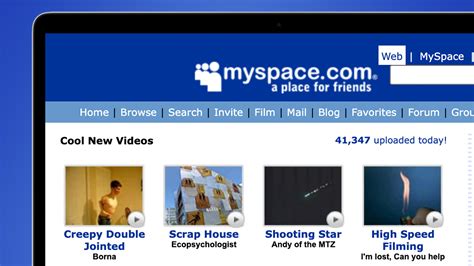
Myspace was the most-visited website in the United States for about two years, and Facebook overtook its US audience inside a single stretch of months it did not see coming. Myspace passed Google and Yahoo to become the most-visited site in the US in June 2006 and reached its peak of 115 million monthly visitors in April 2008. Facebook had already passed Myspace in worldwide unique visitors that same month; the US-specific handoff followed in May 2009.
| Milestone | Myspace | |
|---|---|---|
| Founded | 2003 | 2004 |
| Passed the prior leader in traffic | Passed Google and Yahoo for most-visited US site, June 2006 | Passed Myspace in worldwide unique visitors, April 2008 |
| Peak or handoff point | Peak of 115 million monthly visitors, April 2008 | Passed Myspace in US unique visitors, May 2009 |
| Later sale or scale marker | Sold to Specific Media for about $35 million, June 2011 | Continued global growth well past the decade |
The number that matters most here is thirteen months: that is roughly how long it took Facebook to go from behind Myspace in US audience share to ahead of it, once its growth curve turned upward. One explanation Myspace’s own later account points to: the site stuck to a strategy built around entertainment and music, while Facebook and Twitter kept adding new social features throughout the same stretch.
Music Piracy to Legal Downloads: Napster, LimeWire, and iTunes

Napster’s free file-sharing service was forced offline by court order in 2001, and it took two more years and a different company entirely before a legal paid alternative existed at any real scale. Napster and similar early networks were pushed out of operation under recording-industry litigation in the early 2000s. Apple’s answer arrived on April 28, 2003, when the iTunes Music Store opened with 200,000 songs priced at 99 cents each.
Apple’s own numbers show how fast that model actually worked: in its first week, the store sold more than one million songs. By December 15, 2003, it had reached twenty-five million downloads, and by the following July, one hundred million.
Peer-to-peer file sharing did not disappear on its own. LimeWire, one of the largest remaining networks, was hit with a federal court injunction on October 26, 2010, that shut down its search, download, and file-trading functions outright. The recording industry and LimeWire settled the underlying lawsuit for $105 million in May 2011.
What replaced Napster and LimeWire?
Legal download stores absorbed the demand first, led by iTunes’ 99-cent model. By the end of the 2000s the market had already begun shifting again, this time toward subscription streaming services that emerged before the decade closed.
Storage and Connectivity: Broadband, Flash Drives, and BlackBerry’s Share
US home broadband adoption rose from 3 percent of households in June 2000 to 63 percent of American adults by April 2009, the single largest infrastructure shift of the decade.
| Metric | Early 2000s | Late 2000s | Source |
|---|---|---|---|
| US home broadband adoption | 3% of households, June 2000 | 63% of adults, April 2009 | Pew Research Center |
| US adult cell phone ownership | 53%, 2000 | iPhone launch turns phones into computers, June 2007 | Pew Research Center |
| Average US monthly broadband bill | not tracked at decade start | $39.00, April 2009 (up from $34.50 in 2008) | Pew Research Center |
| BlackBerry’s US smartphone share | n/a, market not yet formed | 37% of 58.7 million US smartphones, September 2010 | Wikipedia, BlackBerry Limited |
Two numbers explain why dial-up disappeared almost silently instead of being replaced by a single dramatic launch: adoption climbed for nine straight years, and the average household paid more for the connection every year it did. USB flash drives followed a similarly slow curve rather than a single splashy debut, arriving commercially in 2000 and taking most of the decade to fully displace floppy disks and CD-Rs as the default way to move files between computers.
Predates the Decade: What Only Went Mainstream, Not Invented
Not everything associated with 2000s technology was invented in the 2000s. Wi-Fi’s core 802.11 standard is widely documented as dating to 1997, Bluetooth was finalized in 1999, and GPS had already been opened to civilian use in the 1990s before its accuracy improved for consumer devices. What changed in the 2000s was not the invention of these technologies but their integration into affordable, mainstream consumer hardware.
Was Wi-Fi actually invented in the 2000s?
No. Its core 802.11 standard was finalized in 1997, three years before the decade most people associate it with began. What arrived in the 2000s was cheap, built-in Wi-Fi hardware, not the underlying standard.
Streaming and Rentals: Netflix’s Bet Against Blockbuster
Netflix added streaming to its existing DVD-by-mail subscription in January 2007, and by 2009 its streaming volume had already overtaken its DVD shipments. Blockbuster still dominated video rental nationwide at the start of the decade, running thousands of stores against Netflix’s mail-order-only model.
Netflix’s own transition eventually closed the loop entirely: the company shipped its final DVD on September 29, 2023, after mailing more than five billion discs since the service began in 1998.
Status Check: What’s Still Around in 2026

Two of this decade’s defining technologies are gone outright. Two survive only as a fraction of what they once were. The rest didn’t just survive: they became infrastructure other technology now runs on.
| Technology | Launched or went mainstream | Displaced by | Status in 2026 |
|---|---|---|---|
| BlackBerry (as a phone) | Consumer wave from 2002 onward | iPhone and Android | Discontinued as a device line; the brand now licenses its name to enterprise software only |
| Myspace | Peaked 2006 to 2008 | Still online, reduced to a small music-and-nostalgia niche | |
| iTunes download store | 2003 | Streaming subscriptions | Still exists but is a minor part of Apple’s music business, folded largely into Apple Music |
| Netflix DVD-by-mail | 1998, expanded through the decade | Netflix’s own streaming service | Fully discontinued, final shipment September 29, 2023 |
Is anything from the 2000s still market-leading today?
Broadband internet and app-store-based smartphones are the clearest survivors: both moved from novelty to baseline infrastructure instead of being displaced by something newer.