What the Names Mean
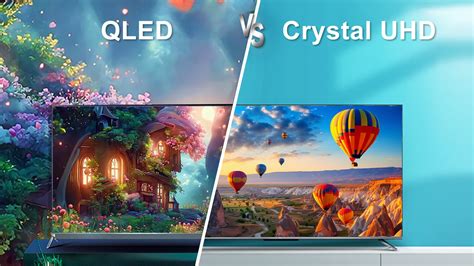
Crystal UHD is Samsung’s standard 4K LED-LCD line, built around what Samsung calls a Crystal Processor. QLED adds a quantum-dot film between the backlight and the LCD panel, widening the color gamut. Both are LCD televisions with an LED backlight; neither is self-emissive like OLED.
Is Crystal UHD the same panel technology as QLED, just without quantum dots? Largely yes at the entry level: Samsung’s U8000F and Q7F both use edge-lit LED backlighting with no local dimming, so the panel-level hardware is closer than the branding suggests. The quantum-dot film is the main addition QLED brings at this tier.
Where “QLED” Gets Confusing: It’s Not One Tier
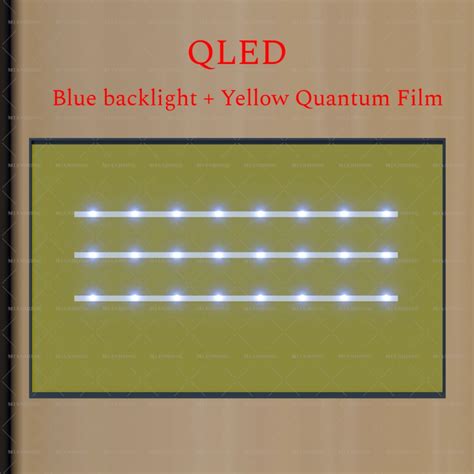
Samsung’s QLED line spans more than one hardware tier, and the difference matters more than the QLED label itself. The Q7F, Samsung’s entry QLED for 2025, uses a direct-lit backlight with no local dimming, the same limitation as the Crystal UHD U8000F. One reviewer testing the 65-inch Q7F against a Neo QLED noted the Q7F’s blacks read as grayish rather than deep, precisely because there’s no way to dim backlight zones independently (Home Technology Review). Step up to the Q8F and Samsung adds local dimming and stronger contrast handling (TV Reviews), which is also where the $220 second price jump, from $529.99 to $749.99 at 55 inches, buys something concrete rather than just a badge.
As of early July 2026, Samsung’s own US store lists the 55-inch U8000F at $349.99 on a product page last updated within days, a live snapshot, not a static figure carried over from an old list.
Exact local-dimming zone counts for the U8000F, Q7F, or Q8F aren’t published by Samsung or by the test labs checked for this research.
The Differences That Change What You See
| Spec | Crystal UHD (U8000F, 2025) | QLED (Q7F, 2025) | Why it matters |
|---|---|---|---|
| Backlight | Edge-lit, no local dimming | Edge/direct-lit, no local dimming | Both share the same contrast ceiling at this tier |
| Color layer | Standard LED color filter | Quantum-dot film, 100% color volume tested to the IDMS 1.03b standard in the DCI-P3 space, third-party verified (Samsung spec sheet) | Wider, richer color on HDR content |
| HDMI / refresh | 3x HDMI 2.0, no listed VRR | 3x HDMI 2.0, no VRR, 60Hz (Tom’s Guide) | Neither is built for 120Hz console or PC gaming |
| Price, 55″ | $349.99 (Samsung US) | $529.99 (Samsung US) | Sets the real gap the rest of this page works from |
The gaming specs are where Crystal UHD and entry QLED land in the same place: neither ships with HDMI 2.1 or a refresh rate above 60Hz, so console or PC gamers chasing higher frame rates need to look at Q8F or above regardless of which entry tier they start from.
Do all QLED TVs have local dimming? No. Samsung’s entry QLED, the Q7F, does not; local dimming appears starting at the Q8F tier and above.
When the Price Gap Shrinks
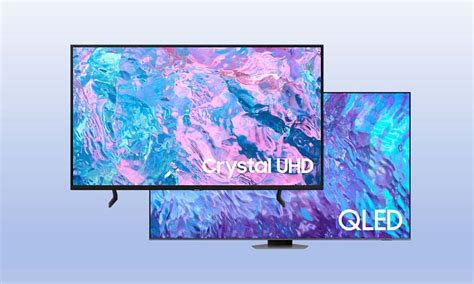
At 55 inches, Crystal UHD to entry QLED costs $180 more, not double. The bigger jump sits between Q7F and Q8F: $220 more for local dimming and stronger contrast handling. Stacked together, moving from Crystal UHD to Q8F costs $400 more at 55 inches, a genuine step change, but arriving in two separate jumps instead of one.
| Tier | Model | Size | Price | Source |
|---|---|---|---|---|
| Crystal UHD | U8000F | 55″ | $349.99 | Samsung US |
| Entry QLED | Q7F | 55″ | $529.99 | Samsung US |
| Mid QLED | Q8F | 55″ | $749.99 | Samsung US |
Is a same-priced QLED always better than Crystal UHD? Not automatically. If the QLED in question is Q7F-tier, you’re paying for wider color, not for local dimming or gaming specs, both of which still require moving to Q8F or higher.
Common Mistakes When Comparing the Two
- Comparing across model years. Samsung reuses the Crystal UHD and QLED names every generation; a 2023 QLED review and a 2026 Crystal UHD listing can describe different hardware entirely. Match the model year, not just the tier name.
- Trusting an in-store side-by-side. Retail floor demos commonly run both TVs in a “Vivid” or store-demo picture mode, which exaggerates contrast and saturation on whichever panel handles oversaturation better, not necessarily the one you’d prefer at home in Standard or Filmmaker Mode.
- Assuming QLED always wins on viewing angle. Some testers report Crystal UHD holding up as well as, or occasionally better than, entry QLED off-axis, contradicting the blanket “QLED wins everything” framing common in comparison articles. Neither tier uses wide-viewing-angle panel technology, so expect both to shift color and contrast well before 30 degrees off-center.
Does last year’s QLED beat this year’s Crystal UHD? Not reliably. Compare the specific model year and SKU on both sides; a prior-generation QLED can trail a newly released Crystal UHD on processor and upscaling even while still leading on color volume.
Which to Buy, by Room and Use
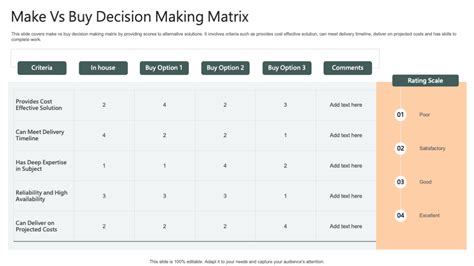
| Room / use case | Recommended | Why |
|---|---|---|
| Bright living room, daytime viewing | QLED (Q7F or above) | Quantum-dot color layer holds up better under ambient light |
| Dark home theater room, movie-focused | Q8F or higher | Local dimming matters more than color volume when the room is already dark |
| Budget bedroom or secondary TV, casual viewing | Crystal UHD | Same backlight ceiling as entry QLED at a lower price |
| Console or PC gaming above 60Hz | Neither Crystal UHD nor Q7F | Both cap at 60Hz with HDMI 2.0; look to Q8F or above for HDMI 2.1 and higher refresh |
What’s Disputed, and What Holds Up
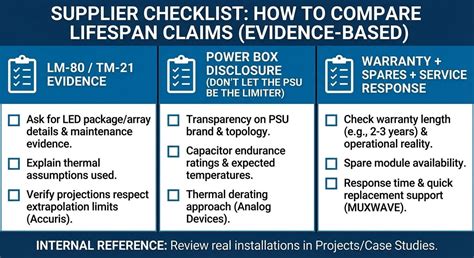
The claim that QLED televisions last longer than Crystal UHD sets shows up across comparison articles, typically stated as a specific year range, but no manufacturer datasheet or independent lab source in this research supports a tier-based lifespan gap. LED and quantum-dot-filter backlights share a broadly similar hours-to-half-brightness range (TV Lifespan & Health Estimator), and general LED backlight life runs roughly 40,000 to 60,000 hours, about 4.5 to 7 years, under high-brightness use (Sunvision Display). The quantum-dot film itself is a passive color layer, not an emissive one, so it isn’t the component that degrades first.
Does QLED really last longer than Crystal UHD? No authoritative source backs a specific year gap between the two tiers; both share a similar LED backlight lifespan range, and the quantum-dot layer doesn’t meaningfully shorten or extend that.