Why the Advertised mAh Number Isn’t What Reaches Your Device
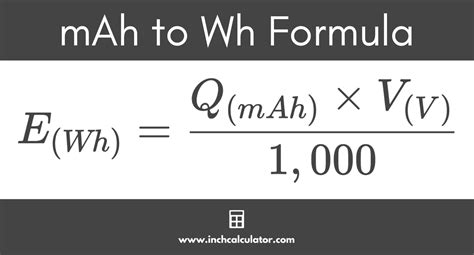
A power bank’s mAh rating is measured at its internal cell voltage, close to 3.7V, not at the 5V or higher voltage it actually outputs to your devices, so part of the number on the box disappears before it reaches your phone. The FAA’s official conversion, used to classify batteries for air travel, states it plainly: multiply the amp-hours by the voltage to get watt-hours, and that figure, not the mAh number, is what determines a battery’s real energy content.
Run the math on a full-size example. A 20,000 mAh power bank, at 3.7V, stores about 74 Wh. That’s the number that matters for regulation and for cross-device comparison. What you can pull out of it is smaller still, because the DC-DC converter that steps 3.7V up to 5V or a PD voltage loses energy as heat, and the connecting cable adds a little more resistance on top of that.
How much smaller depends on who you ask, and that gap is worth naming directly.
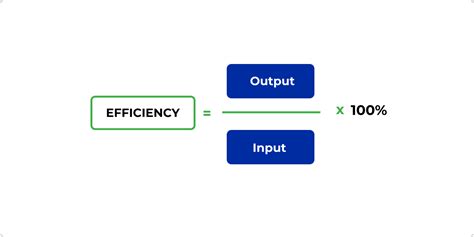
Working from the middle of the commonly cited range, about 75%, a 20,000 mAh bank realistically delivers somewhere in the 52 to 63 Wh band. Charging a 3,692 mAh (about 13.7 Wh) iPhone 17 battery from that, you land around four to four and a half full charges, not the round “four smartphone charges” some vendor guides advertise without ever stating which phone or which efficiency assumption they used.
What’s the actual difference between mAh and Wh?mAh measures electrical charge at a specific voltage, almost always the battery’s internal 3.7V for lithium-ion cells. Wh measures total energy and already accounts for voltage, which is why it’s the correct unit for comparing a power bank to a laptop that charges at 20V, or for checking an airline’s battery limit.
How Much Capacity Your Devices Need
Phones
Most current phones need a power bank rated between 5,000 and 14,000 mAh for one to two full charges, depending on the phone’s battery size.
| Phone | Battery capacity | Bank mAh for 1 full charge | Bank mAh for 2 full charges |
|---|---|---|---|
| iPhone 17 | 3,692 mAh (Apple, via Notebookcheck) | ~5,000 mAh | ~10,000 mAh |
| iPhone 17 Pro Max | 5,088 mAh (Apple, via Notebookcheck) | ~6,800 mAh | ~13,600 mAh |
| Galaxy S25 Ultra | 5,000 mAh rated, 4,855 mAh IEC-tested (Samsung) | ~6,500 mAh | ~13,000 mAh |
Estimates use a 75% delivery-efficiency midpoint; see the skeptical note above for the range this draws from. The Galaxy S25 Ultra’s battery and the iPhone 17 Pro Max’s battery land within 100 mAh of each other, so sizing a bank for any current flagship phone is accurate to within a few hundred mAh either way. The base iPhone 17, at nearly 1,400 mAh less, needs a meaningfully smaller bank to hit the same two-charge target.
Tablets and Handheld Consoles
No current-model tablet or handheld console battery spec was verified with a primary source strong enough to anchor a table row here, so this guide won’t print an unsourced number for that category. As a class, tablets and consoles draw more sustained current than phones during active use, which matters more than their battery size alone: a bank that can recharge a phone comfortably can still struggle to keep a tablet’s screen-on battery level stable during a movie or a game, because the device’s live draw and the bank’s charge rate sit close to each other. The wattage matrix below is the more reliable guide for this category than a mAh number would be.
Laptops
A 13-inch ultrabook with a roughly 50 to 55 Wh battery needs a power bank rated at 20,000 mAh, about 74 Wh, or higher, paired with 60W or higher USB-C PD output, to recover a full charge.
This is one place where comparing mAh directly, instead of converting to Wh first, gives a wrong answer. Apple’s 13-inch MacBook Air with the M5 chip carries a 53.8 Wh battery, up slightly from the 52.6 Wh battery in the earlier M2 and M3 13-inch models (Macworld, reporting Apple’s published specs). At an estimated 75% delivery efficiency, refilling that from empty needs about 70 to 71 Wh of stored capacity in the bank, close to 19,000 mAh at 3.7V. A 20,000 mAh (74 Wh) bank clears that with only a small margin to spare, which is exactly why the common 20,000 mAh minimum guidance for laptops holds up under the math instead of being a rounded guess.
A 16-inch workstation laptop with a larger battery and a 100W or higher charging spec needs proportionally more, and at that point the airline Wh ceiling below becomes the binding constraint before capacity does.
Matching Wattage to Capacity
A power bank that clears the mAh threshold for a device but ships with a low-wattage port will still charge that device slowly, because wattage, not stored capacity, sets the speed of the transfer.
| Use case | Recommended capacity | Recommended charging standard | Why |
|---|---|---|---|
| Daily phone top-up | 5,000 to 10,000 mAh | 18 to 20W PD | Matches typical phone fast-charge wattage without adding bulk |
| Multi-device carry (phone, earbuds, watch) | 15,000 to 20,000 mAh | 20 to 30W PD, multiple ports | Covers simultaneous draw across several small devices without splitting current too thin per port |
| Tablet or handheld console | 10,000 to 20,000 mAh | 30 to 45W PD | Tablets and consoles draw more current under active use than phones at rest |
| Ultrabook (13 to 14 inch) | 20,000 to 27,000 mAh (74 to 100 Wh) | 60W or higher USB-C PD | Matches or exceeds typical ultrabook charging wattage |
| Gaming or workstation laptop | 27,000+ mAh, near the 100 Wh travel ceiling | 100 to 140W USB-C PD (PD 3.1 EPR) | Higher-draw laptops need PD 3.1’s added 28V, 36V, and 48V fixed voltages to actually receive their rated wattage (USB-IF) |
A bank rated for 27,000 mAh but sold with only a 20W port will still fully charge a phone, but it will not usefully charge a laptop no matter how many times its capacity number could theoretically refill the battery.
Does a higher mAh power bank charge my phone faster?No. Charging speed is set by the wattage both devices agree on during negotiation, not by total stored capacity. A 30,000 mAh bank with a 10W port charges a phone slower than a 10,000 mAh bank with a 30W port.
Flying With a Power Bank: The Watt-Hour Ceiling
Airline rules cap carry-on lithium-ion batteries at 100 Wh without special approval, equal to about 27,000 mAh at the standard 3.7V cell voltage. Batteries between 100 and 160 Wh need airline sign-off in advance and are capped at two per passenger; anything above 160 Wh is barred from passenger aircraft entirely (FAA, TSA).
| Power bank rated capacity (at 3.7V) | Approx. watt-hours | Airline status |
|---|---|---|
| 5,000 mAh | ~18.5 Wh | No restriction |
| 10,000 mAh | ~37 Wh | No restriction |
| 20,000 mAh | ~74 Wh | No restriction |
| 27,000 mAh | ~100 Wh | At the carry-on ceiling; check the printed Wh figure directly, since actual cell voltage varies |
| 40,000 mAh | ~148 Wh | Requires advance airline approval; limited to two per passenger |
| 45,000 mAh or more | 165 Wh+ | Forbidden on passenger aircraft |
Because capacity above 27,000 mAh buys diminishing return once the airline math enters the picture, frequent flyers gain more from carrying two 20,000 mAh banks than one 40,000 mAh unit that needs advance approval and still caps out at two per person if they carry a second.
Can I bring a 20,000 mAh power bank on a plane?Yes, in carry-on luggage only. At roughly 74 Wh, it sits well under the 100 Wh threshold that would otherwise require airline approval, and lithium-ion batteries of any size are never allowed in checked baggage.
Why Manufacturers Print mAh Instead of Wh

Manufacturers print mAh because the number is larger and reads as more impressive at the cell’s native 3.7V than the equivalent Wh figure would. A 20,000 mAh label looks bigger than 74 Wh, even though the two describe the same battery. Airlines use watt-hours instead, because energy content, not charge count, is what determines fire risk at altitude.
Common Mistakes That Waste Capacity

- Buying on mAh alone. A high mAh rating with a low-wattage port still charges slowly; check both numbers, not just the one on the front of the box.
- Assuming ports share the full rated output. Charging two devices from the same bank at once splits the available current between them; a bank rated 30W total doesn’t deliver 30W to each of two simultaneous connections.
- Ignoring cycle-life decay. Lithium-ion cells typically hold up for 300 to 500 full charge cycles before capacity drops below 80% of the original rating (Battery University); a two-year-old bank delivers less than its printed number even when new.
- Skipping the cable rating. Cables above 60W generally need an e-marker chip to carry the higher current; an unrated cable can cap a 100W-capable bank and laptop pair down to 60W or less.
- Overbuying past the airline ceiling. A 40,000 mAh bank means advance approval and a two-unit cap per traveler; two 20,000 mAh banks avoid both restrictions and cover the same total capacity.
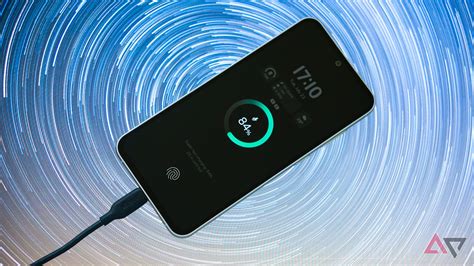
Why did my 10,000 mAh power bank only charge my phone once?At an estimated 70 to 85% delivery efficiency, a 10,000 mAh bank realistically delivers 7,000 to 8,500 mAh, which fully charges a phone in the 3,700 to 5,000 mAh range once with only a partial second charge left over, not the two full charges the sticker math implies.
Quick-Reference Capacity Guide
- 5,000 to 10,000 mAh: one to two phone charges, pocketable, no airline restriction.
- 15,000 to 20,000 mAh: multi-day phone use or one tablet/console charge, still no airline restriction.
- 20,000 to 27,000 mAh (74 to 100 Wh): one ultrabook charge, right at the airline ceiling.
- Above 27,000 mAh (100+ Wh): needs airline approval or is barred outright; splitting into two smaller banks avoids both problems for travel.
Does a power bank lose capacity over time?Yes. Like any lithium-ion battery, it typically retains full-cycle capacity for 300 to 500 charge cycles before dropping below 80% of its original rating, so an older bank delivers less than its printed mAh figure even without any damage or misuse.