Lenovo’s product lines, decoded

Lenovo runs five separate laptop lines, and the names alone don’t tell you what each one is for. ThinkPad covers business durability and security, split further into X (ultraportable), T (mainstream workhorse), L (budget business), and P (workstation) sub-series. Yoga covers 2-in-1 convertibles and creator-focused hardware. Legion and LOQ cover gaming, with Legion the premium tier and LOQ the budget tier. IdeaPad covers everyday and student use. ThinkBook targets small and midsize business, and currently includes Lenovo’s modular concept hardware.
| Line | Positioning | Typical buyer | 2026 entry price | Example 2026 model |
|---|---|---|---|---|
| ThinkPad (T/X/L/P) | Business durability, security, repairability | IT-managed fleets, professionals | $1,439 (ThinkPad L14 Gen 7) | ThinkPad T14 Gen 7 |
| Yoga | 2-in-1 convertibles, creator features | Hybrid workers, students, creatives | Roughly €1,799 (Yoga 9i) | Yoga 9i 2-in-1 Aura Edition |
| Legion | Premium gaming, dedicated GPU | Gamers, streamers, creators | $1,549 (Legion 5i) | Legion 7a Gen 11 |
| LOQ | Budget gaming | Students, entry gamers | $1,149 (LOQ 15AHP11) | LOQ 15AHP11 |
| IdeaPad | Everyday and student computing | Budget-conscious general use | Roughly $899 (IdeaPad Slim 5i Ultra) | IdeaPad Slim 3i (Panther Lake refresh) |
The price spread above shows where the lines actually compete: LOQ undercuts Legion by roughly $400 to $800 for a similar chip generation, and ThinkPad’s L-series exists specifically to bring business security and manageability features below $1,500. (Lenovo StoryHub, CES 2026; Lenovo StoryHub, MWC 2026; Lenovo StoryHub, ThinkPad portfolio)
What’s actually new in 2026

Lenovo’s 2026 laptops were announced in two waves: gaming hardware at CES in January, and consumer plus business hardware at MWC in March. Most of what changed is the chip platform underneath familiar chassis designs, not a redesign of the lines themselves.
| Model | Chip platform | Starting price | Availability | What’s different from prior gen |
|---|---|---|---|---|
| Legion 7a Gen 11 | AMD Ryzen AI 400 (up to Ryzen AI 9 HX 470) | $1,999 | April 2026 | 10% lighter, up to 5% thinner than Legion 7i Gen 10, RTX 5060 max |
| Legion 5i Gen 11 | Intel Core Ultra 9 386H (Panther Lake) | $1,549 | April 2026 | Shares chassis with Legion 5a, adds Thunderbolt where 5a has USB4 |
| ThinkPad T14 Gen 7 / T16 Gen 5 | Intel Core Ultra Series 3 or AMD Ryzen AI PRO 400 | $1,799 | Q2 2026 | First T-series generation to score 10/10 on iFixit’s repairability scale |
| ThinkPad X13 Gen 7 | Intel Core Ultra Series 3 | $1,499 | May 2026 | Extends the X-series into enterprise deployment flexibility |
| Yoga 9i 2-in-1 Aura Edition (14″) | Intel Core Ultra (Aura Edition) | Roughly €1,799 | March 2026 | 2.8K PureSight Pro OLED touch display, Smart Modes software |
Of everything in that table, the ThinkPad repairability jump is the only claim backed by an independent third-party score rather than Lenovo’s own performance and weight figures. (Lenovo StoryHub, CES 2026; Lenovo StoryHub, MWC 2026; Notebookcheck)
What “Aura Edition” adds
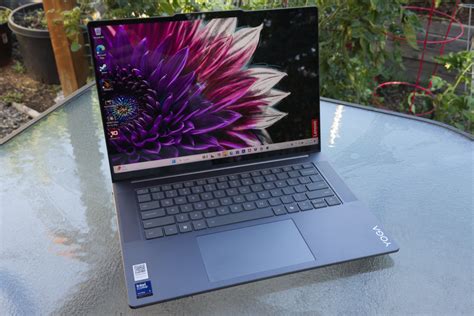
Aura Edition is a co-engineering label Lenovo built with Intel, not a separate product line. It layers Smart Modes (automatic switching between Attention, Shield, and Collaboration profiles), Smart Share device pairing, and Smart Care support access onto existing ThinkPad, Yoga, and IdeaPad chassis running Intel Core Ultra chips. Futurum Group analyst Olivier Blanchard described it as Lenovo’s attempt to build a distinct value proposition inside the Copilot+ PC ecosystem, developed from feedback gathered across more than 10,000 users. It buys software features on top of an existing chassis, not different hardware underneath it. (Futurum Group)
Picking a chip platform: Intel, AMD, or Snapdragon
The three 2026 chip platforms split mainly on app compatibility, not raw speed. Qualcomm’s Snapdragon X2 Elite Extreme scores roughly 24 to 29 percent higher than Intel’s Core Ultra 9 285H on Geekbench 6 single- and multi-core benchmarks, and Windows Central’s month-long test of a Yoga Slim 7x (Gen 11) found the chip held near-full performance on battery compared to x86 rivals, which typically lose about half their performance unplugged. The catch is software: Microsoft’s own support guidance confirms that applications relying on low-level hardware drivers or kernel-level access, the category that includes most anti-cheat systems in competitive multiplayer games, remain a documented failure case on Windows on ARM regardless of how fast the chip benchmarks.
- Pick Intel or AMD (x86) if: you run specialized professional software with hardware-locked licensing, competitive multiplayer games with kernel-level anti-cheat, or older legacy Windows programs that have never shipped an ARM64 build.
- Pick Snapdragon X2 if: your daily workload is browser, office, and cloud-native creative apps, and you weight battery efficiency above guaranteed day-one compatibility.
(Windows Central; Microsoft Q&A)
Will my games run on a Snapdragon-based Lenovo laptop?Many will, through Microsoft’s Prism translation layer, but titles that require kernel-level anti-cheat drivers are a documented failure case independent of how fast the chip benchmarks, per Microsoft’s own compatibility guidance.
Best pick by use case
Business and IT-managed fleets
The ThinkPad T14 Gen 7 is the strongest 2026 business pick on repairability alone. On a tighter budget, the ThinkPad L14 Gen 7 keeps the same business security baseline at a lower price, with a repairability ceiling closer to the previous generation.
Creative and hybrid work
The Yoga 9i 2-in-1 Aura Edition adds a 2.8K PureSight Pro OLED touch display and stylus support for note-taking and design work. Skip it if a clamshell is preferred over a convertible hinge; the non-2-in-1 Yoga models cover that need instead.
Gaming
The Legion 5i is the value pick for 2026. The Legion 7a Gen 11 is lighter and thinner than its predecessor but caps out at an RTX 5060, so anyone chasing frame rate over chassis weight should compare it directly against 2025-era Legion 7i configurations before assuming newer means faster.
Budget and everyday use

The LOQ 15AHP11 is Lenovo’s cheapest 2026 gaming-capable option. For non-gaming everyday use, the IdeaPad Slim 3i’s Panther Lake refresh covers general browsing, office work, and streaming at a lower price point than any Yoga or ThinkPad model.
New 2026 model or 2025 holdover?

The most common mistake in shopping by launch date alone: a newer model number doesn’t guarantee a spec upgrade. The 2026 Legion 7a Gen 11, priced from $1,999 with availability from April 2026, tops out at an RTX 5060 Laptop GPU. The 2025 Legion 7i it replaces could be configured with an RTX 5070, a full tier higher. A buyer chasing raw gaming frame rate over lightest chassis gets more performance per dollar from the older model still on retail shelves.
Is the newest Legion always the fastest?No. The 2026 Legion 7a Gen 11 caps out at an RTX 5060, while the 2025 Legion 7i it replaces could be configured with an RTX 5070, so frame-rate-focused buyers should compare GPU tier directly instead of assuming the newer model wins.
The repairability numbers Lenovo doesn’t put on the spec sheet
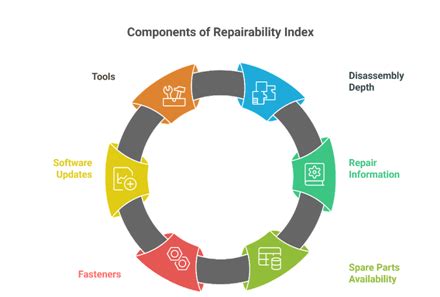
Repairability rarely shows up on a spec sheet, but it has moved fast across ThinkPad’s T-series and it is independently measured.
| Model | iFixit score | Year scored | Key repair features |
|---|---|---|---|
| ThinkPad T14 Gen 3 | 7/10 | Earlier generation | Baseline serviceable design |
| ThinkPad T14 Gen 4 | 9/10 | 2024 | Tool-free battery and keyboard swap |
| ThinkPad T14 Gen 7 | 10/10 (provisional) | 2026 | Modular fan, replaceable Thunderbolt ports, LPCAMM2 memory |
| ThinkPad T16 Gen 5 | 10/10 (provisional) | 2026 | Same repair-friendly design as T14 Gen 7 |
The jump from 9 to 10 covers specific, named fixes: a nearly tool-free battery swap, standard M.2 SSD storage, easier keyboard replacement, serviceable LPCAMM2 memory, and individually replaceable Thunderbolt ports. iFixit also flags what the score doesn’t cover: the Wi-Fi module isn’t practical to upgrade, and deeper display work still involves adhesive. (iFixit; PCWorld)
Does a higher iFixit score actually save money?iFixit’s reporting on the T14 Gen 7 ties the design to lower repair costs for common failures, such as swapping a damaged USB-C port through a modular part instead of a full motherboard replacement, though Lenovo has not published its own repair-cost figures for the new generation.
What the AI features actually do
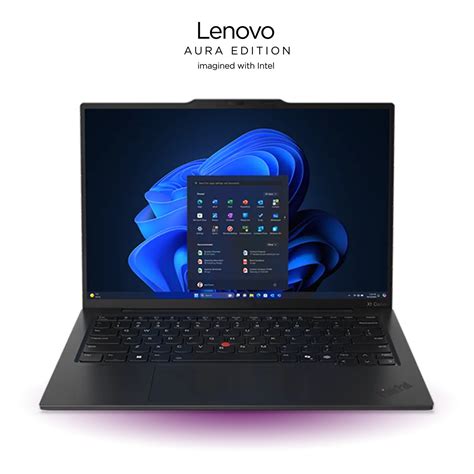
Lenovo’s AI features split into two layers: Aura Edition’s Smart Modes, covered above, and Lenovo AI Engine+, which tunes CPU and GPU power in real time on Legion gaming laptops. Separately, Lenovo’s Qira assistant is described as expanding across more languages and devices during 2026, including a debut on Motorola smartphones, but its exact rollout schedule across the laptop lineup was not detailed at MWC 2026.
Do I need a Copilot+ PC label to get Lenovo’s AI features?Some features, including Smart Modes under Aura Edition, ship specifically on Intel Core Ultra Copilot+ models. Qira’s rollout across the broader Lenovo laptop lineup was not itemized at MWC 2026.