What counts as “new” here
This page uses figures published between January and June 2026, mostly from DataReportal’s April 2026 mid-year update, so “new” means changes visible in that window, not a five-year retrospective. Anything described as a shift compares against that same report’s own year-earlier baseline, stated in each section. A flat top-line figure like total internet penetration is included anyway, because it is informative precisely because three faster layers underneath it are not flat.
The infrastructure layer: who’s actually online
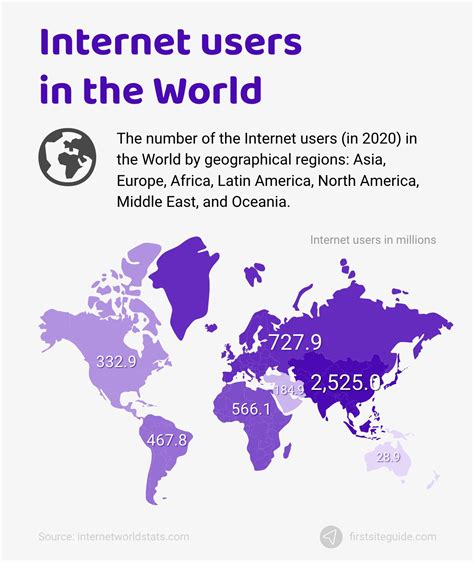
Global internet adoption grew by just 59 million people, 1.0%, in the twelve months to April 2026, and DataReportal’s analysts say reporting delays likely understate the real figure. Unique mobile users reached 5.83 billion, 70.4% of the population, up 103 million (+1.8%), with smartphones now accounting for roughly 89.1% of mobile handsets in use, per Ericsson data cited in the same report. About 2.2 billion people remain offline, concentrated in Southern Asia and Africa.
Is the internet growing quickly right now? No. Global adoption grew just 1.0% in the year to April 2026, the slowest pace this dataset has shown recently, though DataReportal notes reporting lags likely understate the true number.
The attention layer: where the advertising money moved
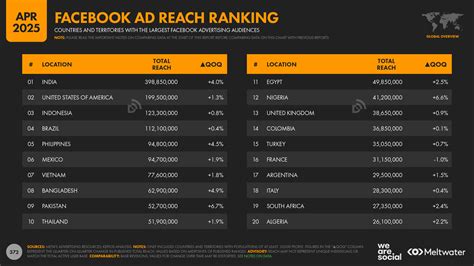
For the first time in DataReportal’s ad-reach rankings, YouTube (2.65 billion monthly ad reach) has overtaken Facebook (2.39 billion), with TikTok (2.21 billion) and Instagram (1.99 billion) trailing both.
| Platform | Monthly ad reach | Source |
|---|---|---|
| YouTube | 2.65 billion | DataReportal, Digital 2026 Mid-Year Update |
| 2.39 billion | DataReportal, Digital 2026 Mid-Year Update | |
| TikTok | 2.21 billion | DataReportal, Digital 2026 Mid-Year Update |
| 1.99 billion | DataReportal, Digital 2026 Mid-Year Update |
The four platforms are separated by less than 700 million users combined, so one quarter of ad-product changes can reorder the top of this list without any real shift in audience size. That is exactly what happened next: Meta discontinued Messenger Inbox ads in November 2025, and Messenger’s potential ad reach fell by more than 95% in the following six months.
Why did Facebook lose the top ad-reach spot to YouTube? DataReportal’s figures don’t name a single cause, but the gap, 2.65 billion versus 2.39 billion, is close enough that one platform’s product decision, like Meta’s discontinued Messenger ad unit, can move the ranking without a real change in audience size.
The production layer: how much of the web AI is actually writing

Estimates of how much of the web is AI-generated range from roughly a third to three-quarters, depending on what is measured and how, and the three most-cited numbers do not describe the same thing.

| Source | What was measured | Headline figure | Date |
|---|---|---|---|
| Ahrefs | 900,000 new web pages, any detectable AI content | 74.2% | April 2025 |
| Graphite | ~65,000 English-language articles, primarily AI-written | Surpassed human volume by Nov 2024, then plateaued | 2025 |
| Independent study (arXiv) | New websites via Internet Archive, AI-generated or AI-assisted | ~35% | Mid-2025 |
Has AI made most of the internet fake? There is no agreed answer. Published estimates for new web content range from about 35% to 74%, and none of the three major counts used the same method or measured the same thing.
What already reversed: Digg’s two-month collapse
Digg is the clearest 2026 case of a “new” internet bet failing fast: the revived platform opened to the public on January 14, 2026, and CEO Justin Mezzell pulled the plug on the open beta on March 13, 2026, after AI-driven bot spam overwhelmed its voting and moderation systems within hours of launch, according to TechCrunch’s reporting. Founders Kevin Rose and Alexis Ohanian had built the relaunch through a closed beta of 67,000 users across 21 communities before opening it to everyone in January; Mezzell later said the team knew bots were a threat but underestimated how sophisticated AI-driven spam had become.
Digg’s team built its trust systems assuming its own AI tools would outpace attackers’ AI tools:
- Treating AI moderation as a ceiling on abuse, not a race. Rose had originally pitched AI as the solution to moderation rather than a new attack surface.
- Reading a fast App Store climb as demand validation. Early ranking reflected bot interest as much as human interest, and the team could not tell the two apart fast enough.
The platform’s homepage now tells beta users to stay tuned, with no confirmed return timeline.
Did Digg fail because of bad execution or something structural? Both, by Digg’s own account. Mezzell said the team knew bots were a threat but underestimated how sophisticated AI-driven spam had become, while Rose had pitched AI as the solution to moderation rather than a new attack surface.
The same growth number, sliced three ways

A single “internet penetration” figure hides most of the interesting change; slicing it by country, connection type, and technology adoption shows where the real movement sits.
| Slice | Size | Share | YoY change | Source |
|---|---|---|---|---|
| Global internet users | 6.12 billion | 73.8% of world population | +1.0% (+59M) | DataReportal |
| United States internet users | 324 million | 93.1% of US population | not separately reported in this source | DataReportal (via HomeFi compilation) |
| Global unique mobile users | 5.83 billion | 70.4% of world population | +1.8% (+103M) | DataReportal |
| Global active GenAI users | 2.42 billion | 29.2% of world population | +141% (+1.4B) | DataReportal |
Growth clusters almost entirely in the GenAI row: adoption there grew roughly 140 times faster last year than overall internet access did.
What to actually pay attention to
None of this supports a single alarmist or triumphant headline. The overall online population is barely growing, the attention economy reordered its top four platforms inside one reporting cycle, and estimates of how AI-written the web has become still disagree by a factor of two. A platform betting its 2026 strategy on AI-driven moderation without budgeting for AI-driven abuse just lost that bet in under sixty days.