What’s inside each can
Three different WD-40 products show up in similar aerosol cans in the same hardware-store aisle, and only one of them is built to be a duster.
| Product | Primary content | Job | Safe on live electronics? |
|---|---|---|---|
| WD-40 Multi-Use Product Aerosol | 45 to 50% LVP aliphatic hydrocarbon, up to 35% petroleum base oil, propelled by 2 to 3% carbon dioxide | Lubricate, penetrate, displace moisture | No |
| WD-40 Specialist Electrical Contact Cleaner | 20 to 30% heptane, 10 to 20% isopropyl alcohol, propelled by 40 to 60% HFC-152a | Dissolve grease, flux, and corrosion off contacts, then evaporate | Yes |
| WD-40 Specialist Air Duster | Over 60% HFC-152a | Blow dust and debris | Yes |
| Generic canned air duster, any brand | Close to 100% HFC-152a (about 87% of the US market) or HFC-134a (about 11%) | Blow dust and debris | Yes |
Two of WD-40’s three aerosol products already run on the same propellant family as an ordinary canned air duster. Only the Multi-Use can is built around an oil instead of a gas.
The three WD-40 products people mix up
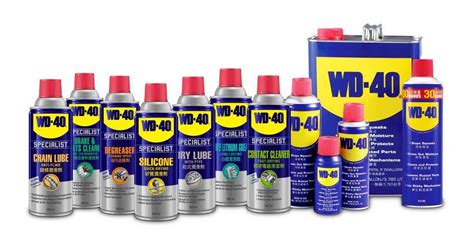
WD-40 Multi-Use Product is the original blue-and-yellow can: a lubricant and penetrant, propelled by carbon dioxide instead of a fluorocarbon, per its SDS.
WD-40 Specialist Electrical Contact Cleaner targets grease and corrosion on electrical contacts and is propelled by 40 to 60% 1,1-difluoroethane, the same gas found in most canned air.
WD-40 Specialist Air Duster is WD-40’s actual entrant into the canned-air category, listed at over 60% HFC-152a, no oil, no solvent.
Does WD-40 make an actual air duster product?
Yes. WD-40 Specialist Air Duster is a separate product from Multi-Use, and its SDS lists it at more than 60% 1,1-difluoroethane, the propellant used in most generic duster brands.
What happens if you spray Multi-Use WD-40 into a laptop
The Multi-Use can’s SDS lists 45 to 50% LVP aliphatic hydrocarbon plus up to 35% petroleum base oil in the liquid portion. A duster is nearly all gas and flashes off on contact; this oil stays behind as a film. Inside a keyboard or fan housing, that film attracts more dust than it removes and can migrate into switch contacts. The same SDS lists the liquid’s flash point at 138°F (59°C), the mark of a flammable liquid product.
Can I use regular WD-40 to clean dust out of a laptop or keyboard?
No. Multi-Use is formulated to leave a protective film behind. The Contact Cleaner and the Air Duster are formulated to leave nothing behind.
Which one do you need

| Task | Recommended product | Why |
|---|---|---|
| Rusted bolt, squeaky hinge, stuck fastener | WD-40 Multi-Use | Calls for a penetrating oil |
| Dust in a keyboard, fan, or vent | WD-40 Specialist Air Duster (or any duster) | Needs a dry gas blast with no residue |
| Corroded battery terminals or flux on a board | WD-40 Specialist Electrical Contact Cleaner | Calls for a solvent that evaporates on contact |
| Protecting a duster can’s own metal valve after storage | WD-40 Multi-Use, exterior only | Oil belongs on the metal housing, never inside the nozzle |
The task decides the product. Penetration calls for Multi-Use, dust removal calls for the duster, and contact corrosion calls for the Contact Cleaner.
Why you should only spray a duster can upright
Inside a duster can, the propellant sits as compressed liquid in equilibrium with a small amount of vapor above it, according to CPSC’s technical description of the product. Tilting or inverting the can lets liquid reach the valve instead of vapor. That liquid comes out as a cold spray that can wet a circuit board instead of blowing it clean.
The safety numbers cleaning guides skip

Between 2012 and 2021, CPSC recorded 1,039 deaths and an estimated 21,700 emergency-department-treated injuries in the US tied to inhaling duster propellant, with 775 of the deaths, or 75%, attributed specifically to HFC-152a. In July 2024, the Commission proposed capping any combination of HFC-152a and HFC-134a at 18 mg per canister: a fraction of what a working duster needs to function, since the cans are otherwise close to 100% propellant by weight. That proposed rule, filed under Docket No. CPSC-2021-0015, was open for public comment through September 30, 2024, and drew 87 comments.

Is it dangerous to inhale duster spray or WD-40 fumes?
Yes, in different ways. Duster propellant inhalation is the specific hazard behind CPSC’s 2024 rulemaking. WD-40’s SDS separately warns that its vapors shouldn’t be breathed and that the liquid is harmful or fatal if swallowed.
Common mistakes with either product

- Spraying Multi-Use directly onto a live circuit board. It leaves an oily film that attracts more dust than it removes.
- Tilting or inverting a duster can while spraying. Releases liquid propellant instead of gas.
- Using Contact Cleaner near an open flame. It’s 40 to 60% HFC-152a, a flammable gas.
- Assuming any “canned air” can is literally just air. Per CPSC, it’s close to 100% liquefied propellant.
Do all canned air dusters use the same chemical?
No. About 87% of US duster products use HFC-152a and about 11% use HFC-134a, per CPSC’s 2024 market analysis, with a small remainder using other propellants.
A can of duster averages $8 to $10. A battery-powered electric duster averages around $56.