What can actually be removed, and what can’t

Three categories matter here, and confusing them wastes effort. First, content you control directly: your own social accounts, blog posts, forum profiles. You can delete these outright. Second, content on sites you don’t own: a data broker listing, an old news article, a forum thread someone else posted. You can request removal, and in many cases the site is legally required to respond, but compliance isn’t automatic or guaranteed. Third, copies you don’t control at all: cached search results, archived snapshots, screenshots someone else took, or data already resold to a company you’ve never contacted. This layer is often genuinely unreachable.
The scale of that third layer is bigger than most people assume. A 2014 Federal Trade Commission study of nine data brokers found that one of them held more than 1.4 billion consumer transactions and 700 billion data elements, and another added roughly 3 billion new data points every month.
Start here: the highest-impact actions this week
Not all of this deserves equal urgency. Some actions matter immediately; others can wait.
- Opt out of the 3 to 5 data brokers most people search first (Spokeo, Whitepages, BeenVerified): each takes under 15 minutes and confirms within days.
- Delete or lock down dormant social accounts, especially ones tied to your real name and an old email address.
- Run a name search across two search engines, not just Google, to see what’s actually visible right now.
- If you’re in California, submit one request through DROP rather than repeating the process broker by broker.
Opting out of data brokers
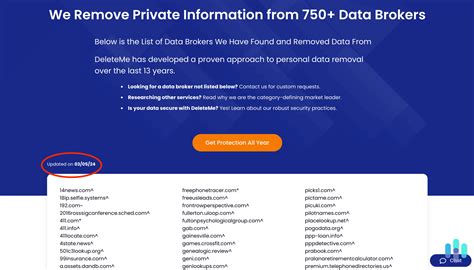
This is the single most repetitive part of the process, and it’s the one place a table earns its keep over prose.
| Broker | Opt-out page | Typical processing time | Verification required |
|---|---|---|---|
| Spokeo | Spokeo’s opt-out page | 24 to 48 hours | Email confirmation |
| Whitepages | Whitepages’ suppression request page | 24 to 48 hours | Phone call with a code |
| BeenVerified | Opt-out link in the site footer (“Do Not Sell or Share My Personal Information”) | 24 to 72 hours | Email confirmation |
| California data brokers (all registered) | California’s DROP platform | Brokers must process requests within 45 days starting Aug 1, 2026 | CA residency, DROP account |
Each row above requires its own separate request per listing; opting out of Spokeo does nothing to your Whitepages listing. That’s the real cost of this step: repetition across however many brokers carry your name, not difficulty.
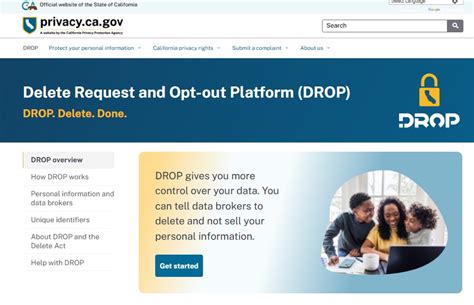
California’s Delete Act created something none of the older broker opt-out processes offer: a single deletion request that reaches every broker registered with the state at once. The California Privacy Protection Agency opened DROP to consumers on January 1, 2026, and registered brokers must start pulling and processing consumer deletion lists from it on August 1, 2026, checking in at least every 45 days after that. Registration itself costs a broker $6,600 a year, which gives the public registry a rough census of who’s actually in this business in the state.
Can data brokers just relist me after I opt out?Yes. Brokers routinely repurchase or recrawl public records, and a listing that disappeared can return within weeks or months. Opting out is something you repeat on a schedule, not a task you finish once.
Delisting from Google vs. removing it at the source
These solve different problems, and treating them as one step is the most common wasted effort in this process.
| Content type | Can Google delist it? | Can the source delete it? | Realistic outcome |
|---|---|---|---|
| Your phone number, email, or home address in a search snippet | Yes, via Results about you | Depends on the site | Google removal is faster; source removal is more complete |
| A data broker listing | Only from search results, not the broker’s database | Yes, via broker opt-out | Both needed: delisting hides it from search, opt-out removes the underlying record |
| An old news article about you | Rarely, only if it violates a narrow policy | Only by contacting the publisher directly | Source contact is usually the only real path |
| A cached or archived copy on the Wayback Machine | Not applicable, separate system | Yes, by emailing [email protected] | No guaranteed outcome; reviewed case by case |
Google’s own tool for this is called Results about you, and it has grown well beyond a niche feature: Google has said more than 10 million people have used it to manage what personal information shows up about them in Search, and a February 2026 update extended it to cover government ID numbers like a driver’s license or passport in addition to phone numbers, emails, and addresses. When Google approves a removal, it does one of two things: a full removal, where the page disappears from Search entirely, or a query-based removal, where the page only disappears from searches that include your name, because the page also contains information the public interest still weighs in favor of keeping visible.
Does removing something from Google delete it from the internet?No. Google removal only affects what shows up in Google’s search results. The page itself, and any other search engine indexing it, is unaffected unless you also contact the site that hosts the content directly.
Deleting and locking down old accounts
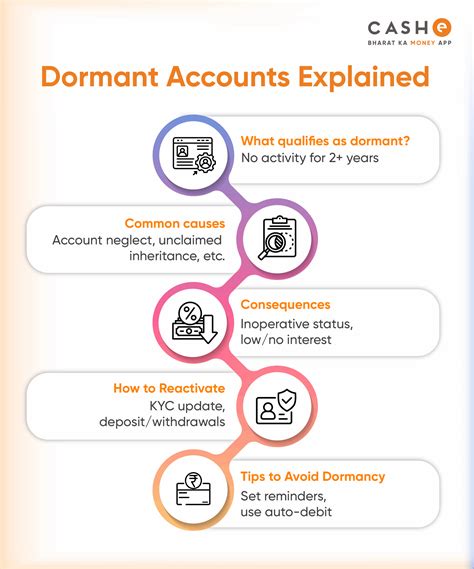
A dormant account with your real name, address, or payment details attached is a live target if that platform is ever breached, whether or not you ever log in again, which is why deleting one matters even when you never think about it. Search your inbox for “welcome,” “verify your account,” or “password reset” to surface signups you’ve long since forgotten. For each account you no longer use, delete it rather than merely abandon it.
For accounts you’re keeping, tighten the privacy settings rather than deleting them outright, particularly on platforms where your profile is set to public by default. This is the one part of the process that genuinely differs by platform, so it resists a single table: Facebook’s audience controls, Instagram’s private-account toggle, and X’s protected-posts setting all sit in different menus and behave differently.
Your legal right to deletion: GDPR and CCPA
| Right | Who it covers | Response deadline | Extension allowed | Enforcement if ignored |
|---|---|---|---|---|
| GDPR Article 17 (erasure) | Individuals in the EU/EEA, any controller processing their data | One month | Up to 2 more months, with notice | Complaint to your national data protection authority |
| CCPA right to delete | California residents, covered businesses | 45 calendar days | Up to 45 more days (90 total), with notice | Complaint to the California Privacy Protection Agency |
Sources: GDPR Article 17 official text; California Attorney General’s CCPA guidance.
A gap worth naming once: the legal minimum here is a response deadline, not a guarantee of deletion. Both laws carve out exceptions (legal obligations, ongoing contracts, fraud prevention, free-expression protections), and a business can lawfully decline part of a request while still meeting its deadline to respond.
Do I have GDPR or CCPA rights if I don’t live in the EU or California?Not directly. GDPR applies to EU/EEA residents regardless of where the company is based, and CCPA applies to California residents specifically. Elsewhere in the U.S., a small number of other states have passed similar laws with their own thresholds and deadlines, but there’s no federal deletion right yet.
Why your footprint keeps coming back

Data brokers don’t hold a static snapshot of you. They repurchase public records on a recurring schedule, license data from each other, and onboard new sources over time, so a listing removed in March can be rebuilt from a different data feed by June.
What most guides skip: shadow profiles and image-abuse protection

Most of what’s covered so far concerns data you can find by searching your own name. Shadow profiles are different: they’re records platforms hold on you that you never directly submitted, built instead from other people’s uploaded contact lists, tagged photos, or shared information about you. You can’t opt out of a shadow profile through a standard broker form, because you were never the one who gave the platform that data in the first place. The usual response is being more selective about what you allow contacts to share, such as disabling contact-list uploads in apps you use.
Two more overlooked areas: archived pages and non-consensual intimate images. If a page about you was deleted from its original site but still lives on the Wayback Machine, the Internet Archive accepts exclusion requests by email to [email protected], though it reviews each one individually and doesn’t guarantee an outcome. For intimate images shared or threatened without consent, StopNCII.org offers a mechanism most people don’t know exists: it generates a digital fingerprint of the image directly on your device, the image itself never leaves your device, and that fingerprint is matched against uploads on partner platforms including Meta, TikTok, Google, and X, so a matching image gets blocked before it spreads further.
When to do it yourself, when to pay, and when the advice doesn’t apply
A paid removal service can automate the repetitive broker-by-broker opt-out work across a large number of sites at once, which is genuinely useful given how many brokers exist and how often listings return. What it can’t do: delete your own social media accounts, since only you can do that, remove a news article, since only the publisher can, or guarantee removal from a site that ignores opt-out requests entirely.
- Do it yourself if you have a handful of accounts and a manageable number of broker listings, and you’re comfortable repeating the process every few months.
- Consider paying if you have dozens of scattered listings, limited time, or an active safety concern where speed matters more than saving a subscription fee.
Is it worth paying a removal service instead of doing this myself?It depends on the number of listings and how much time you have. A paid service saves time on repetitive broker opt-outs but can’t touch your own accounts or force a publisher to take down an article.
- If you have an unusually common name, expect this process to take longer and be less conclusive: search results and broker listings will mix you up with other people sharing your name.
- If you’re a public figure or hold a professional license, expect some content to survive review, since public-interest and public-record exceptions apply more broadly to you than to a private individual.
- If you’re dealing with active harassment or a stalking risk, prioritize the data broker and people-search sites first, since they’re the most direct path to a home address, and use StopNCII.org proactively if intimate images are involved.
What if my name is really common? Is this still worth doing?Yes, but expect it to take longer and be less complete, since search results and broker profiles will mix you up with other people who share your name.
Verify it worked, and keep it that way
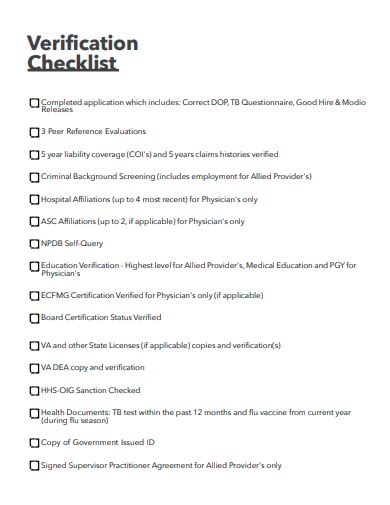
Confirm removal directly rather than assuming a confirmation email means the listing is gone: search the specific broker’s site again after the stated processing window, not just Google. Keep a simple record of what you submitted and when, so a follow-up request doesn’t start from zero. Because re-listing is the norm rather than the exception, put a recurring reminder on your calendar, every 3 to 6 months, to redo the highest-value broker opt-outs and re-run a name search.