Is the Bloom App Still Available?
No. Bloom’s site states plainly that the company was acquired by Spring Health in February 2024 and that the standalone app was discontinued as of February 23, 2025. If you find an old download link or an App Store listing that still references Bloom, treat the pricing and feature claims on it as historical, not current, and check the store page itself before assuming you can subscribe.
Can I still download the Bloom app?
No. The developer’s notice confirms the standalone app was discontinued on February 23, 2025, following the Spring Health acquisition.
Which “Bloom” Are You Looking For?
Several unrelated apps share the name. Alongside the CBT self-therapy app this page covers, there’s “Bloom: Learn to Invest” (a stock-market education app), a Shark Tank-featured metal keycard for blocking phone distractions, a Mac Finder-replacement utility, and at least one separate mood-journaling app also called Bloom. If you landed here looking for one of those, none of what follows applies to you.
What Bloom Used to Offer
Bloom combined short video lessons in cognitive behavioral therapy with daily journaling, mood check-ins, and guided mindfulness or breathwork exercises, taught by guides and credited to clinical advisor Seth Gillihan, PhD. It was built for self-guided use, not live therapy, and Bloom’s App Store listing was explicit that it could not diagnose anything and wasn’t a substitute for a licensed provider in severe cases.
| Feature | What it included | Tier |
|---|---|---|
| CBT video lessons | Short, guide-led sessions on stress, anxiety, sleep, habits, and relationships | Free (limited) / Premium (full library) |
| Journaling | Daily entries with mood tagging and pattern review | Free and Premium |
| Mindfulness and breathwork | Guided audio exercises | Premium |
| Quick check-ins | Short daily mood assessments | Free |
| Personalized advice | Suggestions based on journal entries and check-in data | Premium |
This is historical: none of it can be purchased today. The three pricing tiers it once carried (monthly, annual, lifetime) all stopped being chargeable once the app was discontinued.
Why Bloom Shut Down: The Spring Health Acquisition
Spring Health announced on March 12, 2024 that it had acquired the exclusive rights to Bloom’s self-guided therapy content, citing more than 2.2 million downloads and over 1.6 million users worldwide since Bloom’s launch. The deal covered the content library, not the standalone consumer app, which is why the app kept running for roughly another year before its shutdown notice confirmed the February 23, 2025 discontinuation date.
Is Bloom’s content available anywhere else?
Some of it. Spring Health’s announcement says the acquired sessions are being folded into its employer and health-plan platform, not sold again as a direct consumer app.
A Pattern, Not a One-Off: Sanvello Went Through the Same Thing
Bloom isn’t the only self-guided CBT app that stopped being a standalone consumer product. AbleTo’s announcement states that on January 1, 2023, it folded Sanvello’s self-help capabilities into a new offering called Self Care+, available through AbleTo’s employer and health-plan network. Two of the apps most often recommended as CBT-app comparisons in older reviews are now both gated behind institutional access instead of a direct-to-consumer subscription. That matters for anyone assuming a straightforward app-store purchase will still be there next year.
If You Were a Paying Bloom User
If you had an active subscription when the shutdown took effect, billing should have stopped once the app was discontinued, since there’s nothing left to bill for. Neither Spring Health’s nor Bloom’s public statements mention a specific process for exporting old journal entries, so if you need that data and didn’t save it before the shutdown, there’s currently no confirmed self-service way to retrieve it; contacting Spring Health directly is the only documented path.
What happened to my Bloom journal entries and subscription?
There’s no confirmed public process for recovering old entries after the February 2025 shutdown. For billing questions, Spring Health, as the acquiring company, is the appropriate contact.
Was Bloom Effective? What the Evidence on Self-Guided CBT Apps Shows
A systematic review of self-guided CBT apps for depression found that only about 1 in 10 of the apps it assessed matched evidence-based CBT principles closely, and that usability and privacy documentation varied widely across the category; a separate systematic assessment of self-guided CBT apps reached a similar conclusion on functionality and evidence congruence. Neither study names Bloom specifically, so no claim here should be read as a rating of Bloom’s own clinical outcomes. The honest takeaway is that “CBT-based” branding on an app doesn’t guarantee it matches the evidence as closely as a reader might assume.
Does research support self-guided CBT apps like Bloom?
Partially. Independent reviews find real variation in how closely these apps match evidence-based CBT, so the category label alone isn’t proof of effectiveness.
Live Alternatives Compared
| App | What it offers | Live therapist access | Approx. price | Status |
|---|---|---|---|---|
| Bloom (CBT Therapy & Journal) | Self-guided CBT lessons, journaling | No | N/A | Discontinued Feb 23, 2025 |
| Sanvello content via AbleTo Self Care+ | Self-guided mood tracking and CBT-based tools | No (separate AbleTo therapy network exists) | Included at no direct cost for eligible health-plan or employer members; not sold as a standalone consumer subscription | Live, but access-gated |
| A direct-purchase self-guided CBT app (category benchmark) | Video lessons, journaling, mindfulness | No | Roughly $9 to $15 a month for comparable tiers | Varies by app; verify current pricing before subscribing |
This comparison shows a narrower field than a 2023 roundup would suggest: two of the category’s best-known names, Bloom and Sanvello, are no longer sold as direct consumer subscriptions, and both now require going through an employer or health plan to get equivalent content for free.
Who Self-Guided CBT Apps Are, and Aren’t, Right For
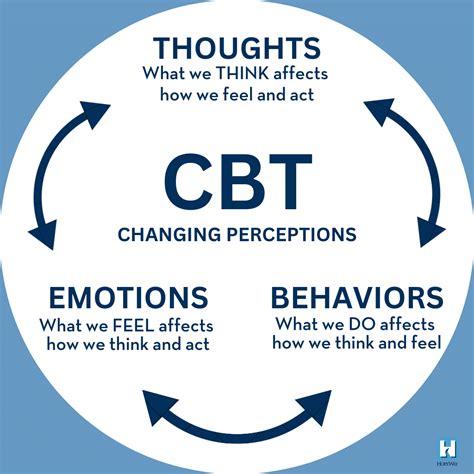
Bloom’s App Store listing was direct about the boundary: the app couldn’t diagnose anything, and severe or treatment-resistant symptoms called for a licensed provider rather than the app alone. Independent research on the wider category backs that up, since reviewed CBT apps varied widely in how closely they matched clinical evidence and how clearly they documented privacy and safety practices. Anyone in crisis should contact a crisis line or emergency services instead of relying on a self-guided app.