The three technologies people mean by "content recognition"
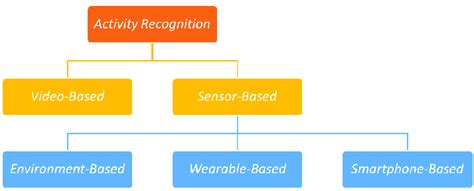
When people search for content recognition technology, three distinct systems get folded into one term, and they serve different purposes.
| Technology | Typical example | What triggers a match | Who benefits | Consumer opt-out |
|---|---|---|---|---|
| TV audience-measurement ACR | Samsung Ads, LG Ads Solutions | Periodic screen or audio fingerprint compared to a content library | Manufacturer, advertisers, broadcasters | Yes, through TV privacy settings |
| Copyright-detection ACR | YouTube Content ID | An uploaded file’s fingerprint compared to a rights-holder database | Rights holders, the platform | Not applicable to viewers; governs uploaders |
| Consumer audio identification | Shazam | A sample the listener chooses to capture, matched on request | The listener | Not applicable; runs only when invoked |
Audience-measurement ACR is the only branch of the three that ships on by default in a household product and doubles as an advertising data source. The other two only activate when a copyright holder or a listener requests a match.
Is Shazam the same technology as smart-TV ACR?
No. Both use audio fingerprinting, but Shazam matches a sample a listener chooses to capture, while smart-TV ACR samples continuously and automatically, whether or not anyone asked it to.
Fingerprinting vs. watermarking: the trade-off that decides which one gets used
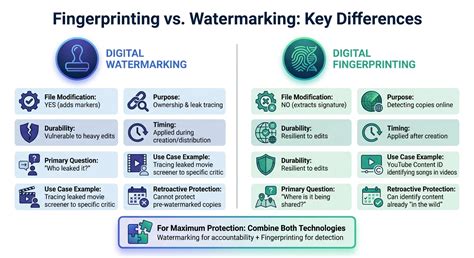
Fingerprinting and watermarking solve the same identification problem through opposite mechanics: fingerprinting reads a hash of content that already exists, while watermarking requires a code embedded before the content ever reaches a viewer.
| Method | Requires source cooperation | Works on already-distributed content | Robust to re-compression | Typical use |
|---|---|---|---|---|
| Acoustic/video fingerprinting | No | Yes | Yes | TV audience measurement, Shazam |
| Digital watermarking | Yes, embedded before distribution | No, only content watermarked going forward | Depends on watermark robustness | Anti-piracy tracing at studios and broadcasters |
| Metadata matching | No, but needs an accurate metadata feed | Yes, if metadata is present | Not applicable | EPG-based recommendations |
This is why TV audience-measurement systems default to fingerprinting: it needs no help from Netflix, Hulu, or any other distributor to work. Broadcast anti-piracy systems that must catch content before it circulates depend on watermarking instead.
Can watermarking identify content that was already broadcast before the watermark existed?
No. A watermark only appears in copies made after it is embedded, so it cannot retroactively tag anything distributed earlier; fingerprinting has no such gap because it works from the content itself.
What your TV sends, and how to turn it off
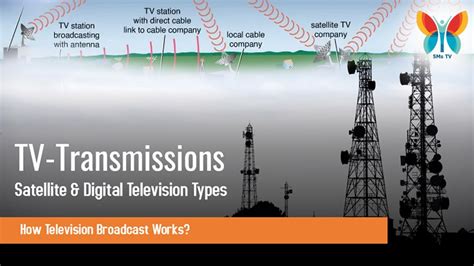
Two smart TV platforms have had their network traffic independently measured, and the schedule each follows differs enough to matter for anyone estimating how much data leaves the television every day, according to a 2024 ACM Internet Measurement Conference audit of LG and Samsung sets.
| Platform | Local capture rate | Measured transmission interval | Where fingerprints go | How to disable |
|---|---|---|---|---|
| LG (webOS, "Live Plus") | Every 10 milliseconds, per LG’s own published documentation | Every 15 seconds | An Alphonso/LG Ads Solutions server, geolocated to Amsterdam in the UK test | Settings > All Settings > General > System > Additional Settings > Live Plus > Off |
| Samsung (Tizen) | Every 500 milliseconds, per Samsung’s published documentation | Every 60 seconds | Samsung-operated ACR servers in London, Amsterdam, or New York, depending on the domain contacted | Settings > General & Privacy > Terms & Privacy > Viewing Information Services > Off |
| Vizio (SmartCast) | Not independently measured in the cited audit | Not independently measured | Vizio-operated servers | Menu (or All Settings) > Admin & Privacy > Viewing Data > Off |
| Roku OS (TCL, Hisense, Sharp, Roku-branded) | Not independently measured | Not independently measured | Roku-operated servers | Settings > Privacy > Smart TV Experience > uncheck "Use Info from TV Inputs" |
Samsung’s fingerprint interval runs four times longer than LG’s. It still transmits roughly twice the data volume per session in the same audit, because its client contacts four separate domains instead of one. Opt-out steps above are drawn from Consumer Reports’ tested guide to smart TV privacy settings.
Does turning off ACR stop all data collection on my TV?
No, only the fingerprint-matching function. Firmware telemetry, error logs, and app-level tracking inside individual streaming apps keep running unless disabled separately. The 2024 academic audit only confirmed that opting out silences the ACR domains specifically, not every other collection channel on the set.
Where recognition fails

Automatic Content Recognition goes quiet during Netflix and YouTube streaming on both LG and Samsung sets, and the 2024 UK/US academic audit attributes this to distribution agreements that block ACR sampling of third-party app content, not a technical inability to fingerprint the picture. The same restriction applied to ad-supported FAST channels in the UK portion of the study, though in the US those channels showed ACR traffic comparable to linear broadcast. Fingerprinting also fails, structurally, for any title that has never been logged in the reference library it is compared against.
Why didn’t my TV recognize what I was watching on Netflix?
Because ACR is designed to stay off during third-party streaming apps. The 2024 academic audit found no ACR network traffic at all while LG or Samsung TVs streamed Netflix or YouTube, confirming that the gap is contractual rather than a fingerprinting failure.
Who benefits, and who doesn’t
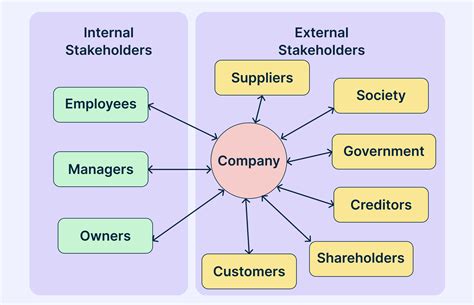
Four groups extract different value from the same fingerprint data, and only one of them, the viewer, has no direct commercial stake in the match.
- Advertisers get near real-time confirmation of which households saw a given ad, replacing sample-based panel estimates with second-by-second logs.
- Broadcasters and platforms use the same logs to route personalized recommendations and, increasingly, to sell inventory against verified impressions rather than estimated reach.
- Rights holders use the copyright-detection branch shown in the taxonomy above to find unlicensed use of their material on platforms like YouTube.
- Viewers receive faster content identification and synced second-screen features in exchange for the data leaving their homes, a trade governed by consent screens that regulators in Texas have now started rewriting by court order.
The 2026 legal reckoning: five lawsuits, two settlements

Texas sued five smart TV makers over ACR consent in December 2025, and by mid-2026 two of them had already resolved their cases on different terms, according to the Texas Attorney General’s own announcement of the Samsung settlement.

LG’s settlement, reported as Cause No. 25DCV358507 in Texas district court on May 11, 2026, permanently bars the company from collecting ACR data without what the judgment defines as affirmative express consent, meaning consent that is freely given, specific, and informed, per court-record reporting from LegalClarity.
Sony, Hisense, and TCL remain in active litigation as of mid-2026, with no settlements announced. Kentucky’s legislature separately signed a law in April 2026 requiring opt-in consent for ACR collection on TVs sold in the state, reversing the industry’s default opt-out approach and marking the first ACR-specific state statute of its kind, per the official Kentucky legislative record for HB 692.
Is ACR itself illegal now?
The Texas lawsuits challenge how consent was obtained, and the technology itself remains legal everywhere in the US as long as a manufacturer discloses it clearly and obtains consent first.
Is the ACR market worth billions? A note on conflicting estimates
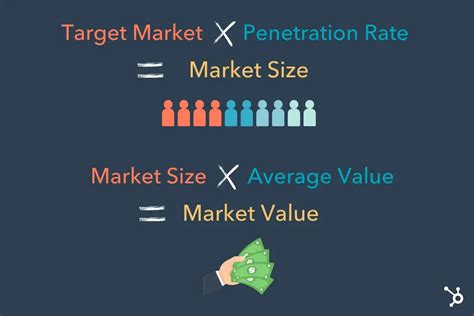
Market-research firms disagree by more than double on how large the ACR industry already is, which matters for any planning that leans on a single cited figure.
| Research firm | Base-year estimate | Base year | Forecast CAGR | Forecast horizon |
|---|---|---|---|---|
| Straits Research | $3.07 billion | 2024 | 18% | to 2033 |
| Data Bridge Market Research | $7.77 billion | 2024 | 29.65% | to 2032 |
| Precedence Research | $4.12 billion | 2025 | 20.15% | to 2035 |
Straits Research’s 2024 baseline sits at less than half of Data Bridge Market Research’s figure for the same year. That gap is wide enough that neither number should anchor a budget or a forecast on its own.