Why Wi-Fi calling doesn’t route around a suspension
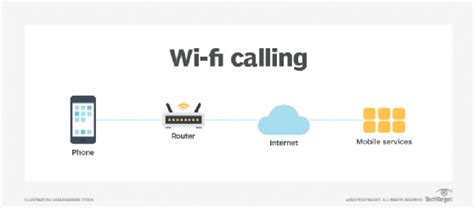
Wi-Fi calling only uses a Wi-Fi network for the hop between the phone and the internet. From there, the call still has to register with the carrier’s core network the same way an ordinary cellular call does, and that registration step is exactly what a suspension is built to block.
AT&T lists three requirements for Wi-Fi Calling to function: a Wi-Fi connection, a compatible phone with the feature turned on, and “an eligible plan” on “an AT&T Wireless or AT&T Prepaid account set up for HD Voice” (AT&T Wireless Support). The third item, an active and correctly provisioned account, is precisely what a suspension removes. The same page limits Wi-Fi Calling’s reach even on a working account: it doesn’t support calls to 211, 311, 511, or 811, and it’s unavailable in a dozen listed countries.
The FCC’s technical study of Wi-Fi-based calling describes the same checkpoint from the network side. A call reaching the carrier core over Wi-Fi passes through either a Trusted Wi-Fi Access Gateway or an Evolved Packet Data Gateway, depending on whether the network recognizes the access point, the same core-network authentication used for cellular voice (FCC Report to Congress on Wi-Fi Access Points and 911).
That authentication step is the dividing line between Wi-Fi calling and an independent internet calling or messaging app. An app that isn’t tied to the carrier account never asks the carrier for permission, so a suspension has nothing to authenticate against and nothing to block.
If I have an eSIM or use Wi-Fi calling on a device with no cellular plan at all, does any of this change?That’s a different setup from a plan that exists but has been suspended. A suspended plan still exists on the carrier’s system and is deliberately blocked; a device with no plan was never registered in the first place, and whether it can register for Wi-Fi-only calling depends on activation rules no source checked for this article documents.
What a suspension blocks, according to AT&T’s documentation
AT&T documents four distinct suspension paths, and only one of them says anything about Wi-Fi at all.
| Suspension type | What’s blocked | Wi-Fi mentioned? | Reactivation |
|---|---|---|---|
| Nonpayment (automatic) | Calls, texts, and data on the cellular network | Not mentioned | Pay the balance in full, wait 5 minutes, power the device off and on (AT&T Support) |
| Lost or stolen (self-reported) | Device blocked from the network; GPS and Find-my-device stop working once suspended | Not mentioned | Contact AT&T; can take up to 24 hours outside the AT&T network (AT&T Support) |
| High data use (self-initiated) | Cellular data only | Confirms a disabled device keeps data access over Wi-Fi; says nothing about calling (AT&T Support) | Reactivate from the same suspension menu |
| Military, hospitalization, or incarceration | Not itemized in AT&T’s reactivation guide | Not mentioned | Contact AT&T at the end of duty or upon release (AT&T Support) |
Only the high-data-use row gives Wi-Fi any explicit role, and that role is limited to data; placing a call over Wi-Fi is a separate function the same document simply doesn’t address. Applying that one exception to a nonpayment suspension would be reading in a claim AT&T never actually makes.
Does a lost-or-stolen suspension affect Wi-Fi calling differently than a nonpayment suspension?The two block different things, one disables the device and its location features, the other is purely billing-driven, but neither document states whether Wi-Fi calling specifically survives its version of the block.
Staying reachable without your suspended number

If Wi-Fi calling is out, the two paths that reliably remain are an internet calling or messaging app not tied to the carrier account, and simply borrowing another line.
| Method | Requires the other person to have it too | Uses your phone number | Works with zero cellular service |
|---|---|---|---|
| Wi-Fi calling on the suspended line | No | Yes | Unlikely once suspended (see mechanism above) |
| Internet calling or messaging app | Usually, unless it can dial a real phone number | No, uses the app’s own account ID | Yes, provided it was installed and signed in before the suspension |
| Landline or a borrowed phone | No | No | Yes, doesn’t touch the suspended account |
| 911 over the ordinary cellular radio | No | Connects as an emergency-only call | Yes, guaranteed regardless of active service (FCC) |
The app route only helps if it was already installed and signed in before the line went down, since downloading a new one typically needs the same cellular data connection the suspension just removed.
If I message someone from an app during a suspension, will it show my real phone number?No. Apps not tied to the carrier account identify a sender by an account username or app-specific ID instead of the suspended phone number, so the recipient needs to already have that same app and contact added to recognize the message.
Can you still reach 911 while suspended?
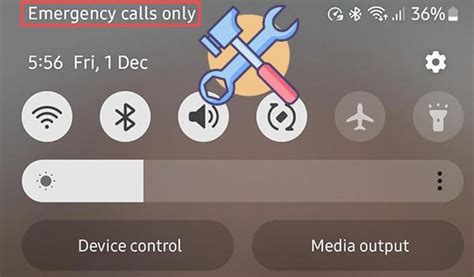
Over the ordinary cellular radio, yes: federal rules require every phone that can find a signal to connect to 911 even with no active service. Over Wi-Fi calling specifically, no carrier or federal document confirms the same guarantee.
Under 47 CFR § 9.4, carriers must transmit every 911 call regardless of whether the caller has an active account, a rule written to cover “non-service-initialized” devices, including deactivated phones searching for any available tower (FCC). That protection was built around the cellular radio path, not Wi-Fi calling.
Wi-Fi calling’s 911 handling is a separate question. AT&T’s Wi-Fi Calling page states that a 911 call placed over the feature is routed “based on location data from your device and the Wi-Fi network,” and that the call disconnects if the Wi-Fi connection drops (AT&T Support) — but that assumes Wi-Fi Calling is functioning at all, which the rest of this article argues a suspension is likely to prevent. The FCC’s review of 911 access over Wi-Fi found no adopted standard letting an unauthenticated device reach 911 purely through a Wi-Fi connection (FCC Report to Congress).
Can I call 911 over Wi-Fi calling specifically if my line is suspended?No document from AT&T, Verizon, T-Mobile, or the FCC confirms that. If the phone can pick up a signal from any carrier’s tower, the ordinary cellular 911 path is the one federal rules actually guarantee regardless of account status.
Getting Wi-Fi calling working again after you pay
AT&T’s instructions for a nonpayment suspension are specific: pay the balance in full, wait 5 minutes, then power the device off and back on (AT&T Support). A reconnection fee lands on the next bill instead of at the time of payment. None of the sources reviewed for this article say whether Wi-Fi calling needs its own manual toggle after that restart.