Samsung’s current flagship line is not one device. The Galaxy S26, S26+, and S26 Ultra, announced February 25, 2026 and released March 11, 2026, are three separate chassis with three different screen sizes, and a case built for one will not sit correctly on another.
Match the case to your exact Galaxy model
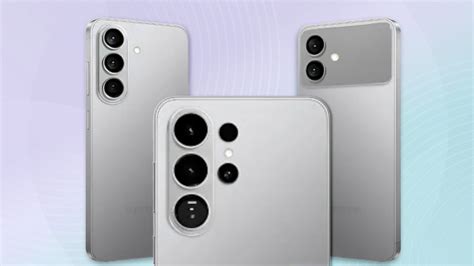
Case listings often say “fits Galaxy S26 series,” which is precise enough for the base S26 and S26+, whose rail geometry is close, but not for the Ultra, whose larger frame and camera housing sit differently. The dimensions below come from Samsung’s own product specifications and independent device-spec records.
| Model | Screen size (rounded) | Body dimensions | Back material | IP rating |
|---|---|---|---|---|
| Galaxy S26 | 6.3in (6.1in) | 149.6 x 71.7 x 7.2mm, 167g | Corning Gorilla Glass Victus 2 | IP68 (1.5m, 30 min) |
| Galaxy S26+ | 6.7in (6.5in) | Larger footprint, same glass and build as S26 | Corning Gorilla Glass Victus 2 | IP68 (1.5m, 30 min) |
| Galaxy S26 Ultra | 6.9in (6.7in) | Largest of the three; integrated S Pen silo | Corning Gorilla Armor 2 | IP68 (1.5m, 30 min) |
The screen sizes in parentheses are Samsung’s own “accounting for rounded corners” measurement, the number that determines whether a case’s cutout actually lines up with the visible display. Match by exact model name, not by “S26 series,” whenever a case makes a fit-critical claim like a specific raised-lip height or an S Pen silo cutout, since only the Ultra needs that cutout at all.
Will a Galaxy S25 case fit my Galaxy S26?No. Even where screen sizes are close, the S26 line’s frame, button placement, and camera layout changed enough between generations that a case built for the previous generation will not seat correctly on the new one.
Do you actually need a case at all
All three current Galaxy S26 models carry Samsung’s own IP68 dust and water rating, tested to 1.5 meters of fresh water for 30 minutes, and Gorilla Glass Victus 2 or Gorilla Armor 2 on the outer surfaces. That covers splashes and everyday scuffs well. It does not cover a corner-first drop onto concrete, the exact failure mode a case exists to prevent.
What an everyday case actually needs to get right
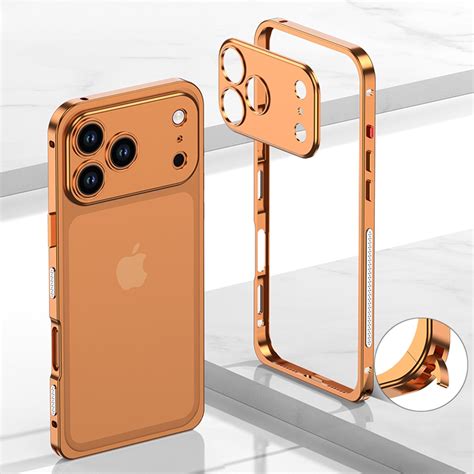
On the Ultra specifically, a raised rear edge matters as much as the front one, because Gorilla Armor 2 covers the back too: a flat drop can crack the rear panel through a case with no rear lip, not just the front glass. On the smaller, more rounded S26 and S26+ rails, grip texture reduces the odds of the phone sliding out of a hand in the first place, before a drop even happens.
The “military-grade” claim, and what it actually tests
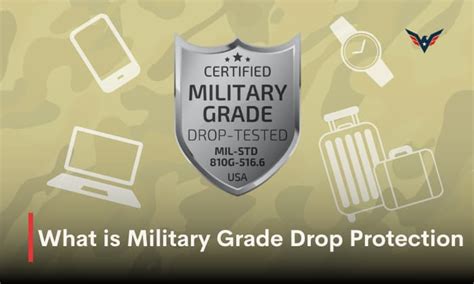
Rugged case listings lean on “military-grade drop protection,” usually pointing at MIL-STD-810G or its 2019 successor, MIL-STD-810H. The phrase is narrower than it sounds. MIL-STD-810 is a public U.S. Department of Defense document covering dozens of environmental test methods, and for phone cases only one of them, Method 516.6, is relevant.
None of this makes MIL-STD-labeled cases bad. It means the label indicates a manufacturer’s design intent, not a third party’s confirmation.
Does “military-grade” drop protection actually mean anything?It refers to a real, public U.S. military test method, Method 516.6, part of MIL-STD-810. Compliance is self-declared, and no outside lab checks the claim before sale.
Why Samsung cases need a magnet ring for Qi2
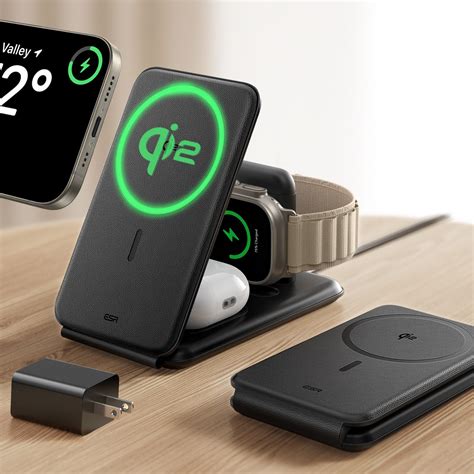
Every Galaxy S26 model supports the Qi2 wireless charging standard, at different speeds: 15W on the base S26, 20W on the S26+, and 25W on the Ultra. What none of them have is a magnet built into the chassis. Qi2’s alignment feature, the Magnetic Power Profile, needs a ring of magnets around the charging coil, and on a Samsung phone that ring exists only if the case supplies it.
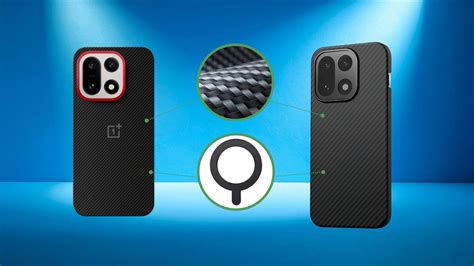
This is a functional gap, not marketing language: an uncased Galaxy S26 charges on a Qi2 pad, but without the snap alignment a case-based magnet ring provides. Samsung’s own accessory pricing shows the scale of the workaround: its official Qi2-compatible magnetic case for the Galaxy S25 sold for $29.99, a separate purchase required to get a feature competing phones build in.
| Model | Qi2 charging speed | Native magnets | Case requirement for snap alignment |
|---|---|---|---|
| Galaxy S26 | 15W | None | Case with Qi2 magnet ring required |
| Galaxy S26+ | 20W | None | Case with Qi2 magnet ring required |
| Galaxy S26 Ultra | 25W | None | Case with Qi2 magnet ring required |
Every row settles the same practical point differently by speed: whichever Galaxy model you own, “supports Qi2” describes the phone’s charging ceiling, not whether a charger will snap into place, and only a magnet-equipped case closes that gap.
Why doesn’t my Galaxy S26 snap onto a wireless charger the way some other phones do?Because Samsung didn’t build magnets into the S26 chassis. The phone supports Qi2’s charging speed, but the magnetic alignment ring has to come from the case, not the phone.
Repair cost versus Care+ versus a $20 case
A case is cheap insurance against a specific, priced risk. Samsung’s own quoted out-of-warranty screen repair price for the base Galaxy S26 is $174; independent repair-cost trackers put flagship Android screen repairs generally between $200 and $330, with Ultra-tier devices at the higher end because of their larger, more complex display assemblies.
| Item | Cost | What it buys |
|---|---|---|
| Everyday slim case | $15 to $30 | Raised-edge drop protection, no ongoing cost |
| Samsung Care+ (S26 tier) | About $5/month | $29 flat screen-repair deductible per incident |
| Care+ with Theft and Loss | $10 to $15/month depending on model | Adds loss and theft replacement on top of repair coverage |
| Out-of-warranty screen repair, no coverage | $174 (S26) up to $300+ (Ultra range) | One repair, no ongoing coverage |
A $25 case that prevents even one drop-related crack pays for itself several times over against a $174 to $300-plus repair bill. Care+ nets out favorably mainly for people who have already cracked a screen before, since its monthly cost only pays off across multiple incidents.
Is Samsung Care+ worth buying if I already have a good case?Usually not for the median user. A case with a raised edge addresses the same drop risk Care+’s screen-repair deductible covers, at a fraction of the running cost, unless theft or loss coverage matters too, which no case provides.
Mistakes that cost people money
- Buying by “S26 series” alone for the Ultra. The base S26 and S26+ share a rail profile; the Ultra doesn’t. A generic “series” case risks a loose fit around the Ultra’s camera housing and S Pen silo.
- Trusting “military-grade” as a pass or fail certification. Treat it as a design target the manufacturer states for itself, not a lab result someone else confirmed.
Reliable public data on case fit and repair costs for Samsung’s A-series and older, still-current S-series models is thinner than for the S26 line; this guide covers the flagship generation where manufacturer and independent specs are both verifiable.