How Satellite, Vision, and LiDAR Navigation Actually Differ
RTK-GPS pairs a receiver on the mower with a fixed base station that corrects satellite position data to centimeter-level accuracy in open sky. Dense canopy, tall structures, and metal fencing scatter or block that signal, and once the fix degrades from solid to floating, accuracy drops with it. Vision navigation (VSLAM) uses a camera to learn the yard’s edges and identify obstacles, and it holds up under canopy far better than RTK alone, but low light, fog, and a dirty lens all degrade it, and a lawn edge that fades gradually into gravel or mulch is genuinely hard for a camera to read. LiDAR maps the yard in 360 degrees using laser time-of-flight measurement, and because it doesn’t depend on either satellites or ambient light, it holds a consistent map under trees and after dark; the tradeoff is added hardware cost, and it still needs a paired vision or AI layer to tell a pet from a flowerpot. Most current mowers fuse two of these systems rather than relying on one, precisely because each one’s weak spot is a different environmental condition.
| Navigation type | Strength | Where it breaks down | Best-fit yard |
|---|---|---|---|
| RTK-GPS | Centimeter-level accuracy in open sky | Dense tree canopy and metal fencing degrade the fix from solid to floating | Open lawns with an unobstructed sky view |
| Vision (VSLAM) | Works without satellite visibility | Low light, fog, glare, and low-contrast grass-to-gravel edges | Well-lit yards with clearly defined borders |
| LiDAR | Consistent map regardless of light or satellite visibility | Higher hardware cost; still needs vision or AI to classify obstacles | Shaded or complex yards where lighting and sky view both vary |
| RTK + Vision or LiDAR + Vision (hybrid) | Covers most single-system weak spots | Fusion still has a maximum no-fix duration before manual intervention is needed | Typical suburban yards with mixed sun, shade, and obstacles |
A hybrid system doesn’t just add features; it swaps one technology’s blind spot for the other’s strength, which is why nearly every current mid-range and premium model bundles at least two of these systems rather than shipping with just one.
What happens if the mower loses satellite signal under trees?
A patented dead-reckoning method lets the mower keep moving using onboard inertial and vision sensors while it waits for the satellite fix to return, shortening recalibration time instead of stopping outright. That fallback is time-limited: if the signal stays blocked too long, most systems will slow, pause, or require manual intervention rather than continue to estimate position indefinitely.
Matching a Mower to Your Yard’s Shape, Not Its Acreage
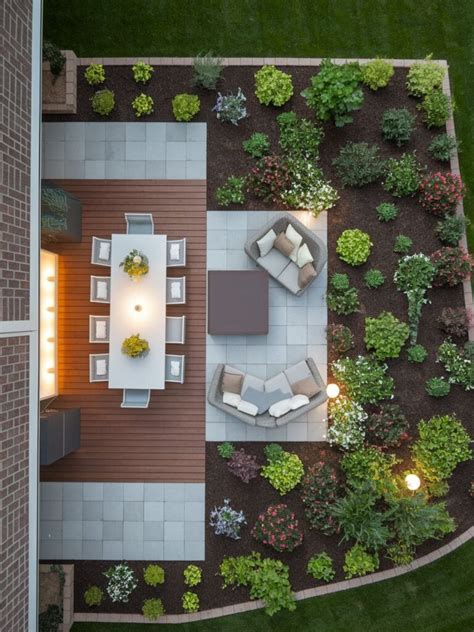
A quarter-acre lawn shaped like a simple rectangle with full sky view is a different buying decision than a quarter-acre lawn split by a driveway and shaded for half the day, even though both get sold under the same “0.25 acre” spec. Acreage ratings describe area, not obstacle density or tree cover, and those are what actually decide whether RTK alone holds up or a hybrid system earns its price premium.
Four Wire-Free Models and the Yard Conditions Each One Suits

| Model | Navigation | Coverage | Slope rating | Edge-cutting spec |
|---|---|---|---|---|
| Segway Navimow i105N | RTK + Vision (EFLS 2.0) | Up to 1/8 acre | 30% (17°) | Standard boundary mode; no offset-blade edge system |
| Segway Navimow i110N | RTK + Vision (EFLS 2.0) | Up to 1/4 acre | 30% (17°) | Standard boundary mode; ride-on edge mode available |
| Mammotion LUBA 2 AWD | RTK + LiDAR + AI Vision | Large lawns, all-wheel drive | 80% (38.6°) | Ride-on zero-distance edge cutting, under 2 inches; rated for Bermuda and Kentucky Bluegrass |
| MOVA LiDAX Ultra 1000 | LiDAR + AI Vision (RTK-free) | Up to 1/4 acre | 45% | Marketed as zero-edge; no independently measured gap figure found |
The clearest split in this table isn’t price, it’s slope and grass type: the LUBA 2 AWD is the only one with a published slope rating over 45 percent and the only one naming specific warm- and cool-season grass compatibility, while the two Navimow models are built for flatter, smaller lots. An independent PCWorld test of the i110N on a lawn sitting roughly 10 feet above street level, crossed by a sidewalk in four places, found the boundary-holding itself worked every time; the limiting factor was the mower’s front-wheel-drive traction on the slope, not GPS accuracy. A “slope-rated” number can describe where the mower knows it is, not whether it can physically climb there.
The Edge-Cutting Gap Every Wire-Free Mower Shares
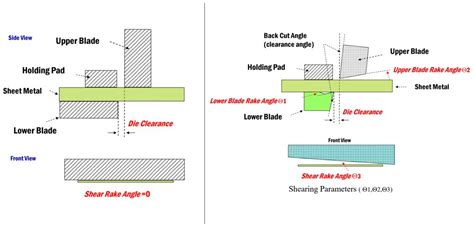
No navigation upgrade removes this limitation, because it’s mechanical, not electronic: the blade sits inside the mower’s housing for safety, and the housing has to stop short of a wall or fence. A standard centered-blade design leaves 10 to 20 centimeters, roughly 4 to 8 inches, of uncut grass along a hard edge. Offset-blade “edge mode” designs cut that to around 5 centimeters, closer to 2 inches, and even the WORX-style offset system with a side-mounted blade guard still leaves about 2.5 inches against a solid wall. The best documented result in the wire-free category specifically is the ECOVACS GOAT A2500 RTK, which pairs a LiDAR-enhanced RTK system with a dedicated edge-trim mode to bring the gap down to 1.97 inches.
| Blade/deck design | Typical uncut gap | Example |
|---|---|---|
| Centered blade, no edge mode | 4 to 8 inches | Standard robotic mower design |
| Offset blade, edge-cutting mode | About 2 inches | Robomow-documented edge-mode design |
| Offset blade with side guard | About 2.5 inches against solid walls | WORX Landroid-style offset system |
| RTK + vision with dedicated edge trim | 1.97 inches | ECOVACS GOAT A2500 RTK |
None of these numbers reach zero.
Can a buyer close the edge-cutting gap without changing mowers?
Yes, partially: laying a narrow strip of pavers or stone level with the turf lets many mowers roll one wheel over the hard surface while the blade reaches further into the grass, which shrinks the visible gap without requiring an offset-blade model.
Tall Grass, Cool-Season Turf, and Cutting-Height Limits
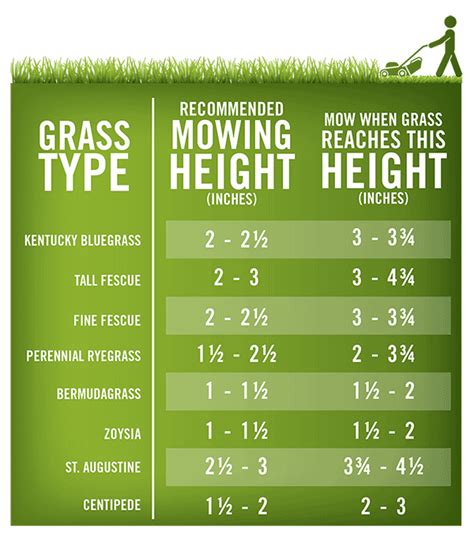
Robotic mowers are built for frequent, light trims, not overgrown-lawn recovery, and most models struggle once grass passes roughly 4 to 6 inches in height. A centrally mounted cutting deck also has a basic mechanical limit that predates robotics entirely: wheels rolling ahead of the blade can bend tall grass down before it reaches the cutting path, and on a heavier all-wheel-drive platform that ground pressure is higher. There’s no independently published, model-specific data confirming that AWD platforms flatten grass more than front-wheel-drive ones; what is documented is the height ceiling itself, which applies across drivetrains.
How often does a wire-free mower need to run to avoid the tall-grass problem?
Since the failure point is height, not drivetrain, keeping cuts frequent enough that grass never approaches 4 to 6 inches between passes, typically every 1 to 3 days during active growth, avoids the problem regardless of which model is chosen.
What Wire-Free Actually Costs Per Year
| Cost category | Typical range | Frequency |
|---|---|---|
| Replacement blades | $15 to $30 per set | Every 2 to 3 months |
| Electricity | $36 to $60 per year | Ongoing (20 to 35 kWh/month at $0.15/kWh) |
| Battery replacement | $100 to $300 | Every 3 to 5 years |
| Professional wire installation avoided | $200 to $800 | One-time, wired systems only |
Add the blade and electricity lines together and a typical year runs $95 to $180 before any battery replacement falls due, a number worth comparing against a wired system’s avoided $200 to $800 install cost rather than against a vague market price range.
Is a wire-free mower actually cheaper than one with a buried wire over time?
Wire-free avoids the $200 to $800 professional installation cost and the ongoing risk of wire breaks, but hybrid RTK-plus-vision or LiDAR-plus-vision units typically carry a higher purchase price than an equivalent wired model, so the total-cost advantage comes more from the install cost avoided than from any difference in blade or electricity spending.
A Pre-Purchase Yard Check
- Sky visibility over the mowing area. Walk the yard and note where tree canopy or roofline blocks a clear view straight up; those spots are where RTK-only systems are most likely to lose fix.
- Edge type at every border. A hard wall or fence will always leave an uncut strip; a lawn bordering gravel or a walkway level with the turf lets some models roll slightly over and cut cleaner.
- Number of disconnected zones. A front yard and back yard separated by a driveway or gate counts as multiple zones, narrowing the field to models with multi-zone mapping.
- Realistic mowing height. If the lawn is allowed to grow past 4 to 6 inches between cuts, expect reduced cut quality regardless of which model is chosen.