
How to tell real AI from a marketing label
Run any product through these four questions before the price matters:
- Would it still do something useful with the AI switched off? A voice recorder that stores audio locally is useful either way. A “smart” toothbrush that only works because an app scores your brushing is not.
- Does the core feature require a subscription, or just the extras? Plaud’s hardware records and stores audio without a plan; the subscription unlocks transcription and summaries. Oura’s ring tracks raw data for free, but the daily Readiness, Sleep, and Activity scores are membership-only (Oura).
- Does it process on the device or in the cloud? On-device processing keeps working without Wi-Fi and generally exposes less raw audio or video to a third-party server. Cloud processing is usually more capable but adds a dependency: if the company’s servers go away, so does the feature.
- Could your phone already do this, just less conveniently? Answered in detail further down, because the honest answer changes by category.
Recording wearables: what they cost and where they fail
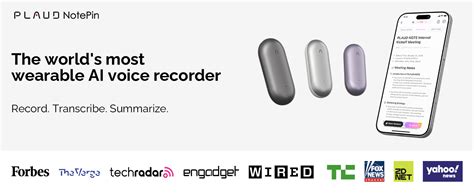
This category is the most mature and the most evidenced. Plaud’s US lineup runs from the $159 NotePin to the $189 Note Pro, with a free Starter plan (300 transcription minutes a month), a Pro plan at $99.99 a year or $17.99 a month (1,200 minutes), and an Unlimited plan at $239.99 a year or $29.99 a month (Plaud). Bee sells a $49.99 wristband with a $19-a-month subscription and was acquired by Amazon in July 2025 (TechCrunch).
The acquisition is the useful part. It is not Amazon’s first wearable bet: Amazon’s earlier Halo fitness band was discontinued in 2023 (CNBC). A company can support a device for years or fold it within one. Humane’s AI Pin launched in November 2023 at $699 plus $24 a month; by early 2025 it had been discounted to $499, and on February 28, 2025, every unit still in use went dark at once when HP bought Humane’s remaining assets for $116 million, a fraction of the more than $230 million the startup had raised (TechCrunch). Nobody who bought a $699 pin got to choose when it stopped working.
The buyer’s question this raises has nothing to do with transcription accuracy. It’s whether the hardware still does anything useful if the company disappears tomorrow. A recorder that stores audio locally survives that scenario. One that needs a live server connection for its core function does not.
AI smart glasses: what they cost and where they fail
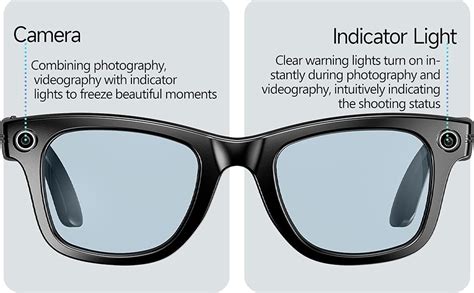
Ray-Ban Meta Gen 2 starts around $379 and delivers about 4 hours of mixed-use battery life, or roughly 32 hours including the charging case. The Meta Ray-Ban Display adds a heads-up screen and an EMG wristband for $799, at 6 hours of mixed-use battery and about 30 hours with the case (Meta; Road to VR). Both rely on a small LED to signal when the camera is recording.
That LED is the weak point. A 404 Media investigation found a cheap third-party kit that disables it, and in June 2026 Wired and the Electronic Frontier Foundation’s Threat Lab reported dormant facial-recognition code, internally called “Name Tag,” found active on more than 50 million Gen 2 devices through a routine app update, ahead of any public announcement of the feature (reporting compiled on Wikipedia’s Ray-Ban Meta page). For a wearer in Illinois, that also raises the state’s Biometric Information Privacy Act, which requires written consent before collecting face geometry. None of this shows up on a spec sheet. It shows up when someone else, not the wearer, is the one whose data the glasses are capturing.
Health-tracking wearables: the subscription math
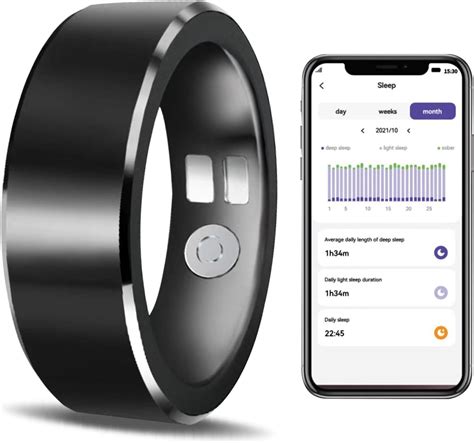
Oura Ring 5 costs $399 for Black and Silver finishes, $499 for the rest. Membership costs $5.99 a month or $69.99 a year and is what turns raw sensor data into the Readiness, Sleep, and Activity scores people actually check every morning; without it, the ring still records heart rate, temperature, and sleep stages, but shows none of the interpretation (Oura). Ring 4, the previous generation, was discounted to about $226 during a 2026 sale, worth checking before paying full price for Ring 5 if the newest sensor hardware isn’t the priority (ThePricer, citing TechCrunch and The Verge).
What this guide doesn’t cover

AI home hubs, kitchen appliances, and “luxury AI” concept devices are left out here on purpose. Independently verifiable pricing, battery data, and real-world testing for that category could not be confirmed at the level of the three categories above, and a guide built on unverifiable numbers is worse than no guide at all.
What it actually costs over time

| Category | Product | Hardware price | Subscription | 3-year total |
|---|---|---|---|---|
| Recording wearable | Plaud NotePin | $159 | $0 to $239.99/yr | $159 to $879 |
| Recording wearable | Bee | $49.99 | $19/mo ($228/yr) | $734 |
| Smart glasses | Ray-Ban Meta Gen 2 | ~$379 | $0 | ~$379 |
| Smart glasses | Meta Ray-Ban Display | $799 | $0 | $799 |
| Health ring | Oura Ring 5 | $399 to $499 | $69.99/yr | $609 to $709 |
The smart glasses carry no ongoing fee at all, so their entire three-year cost is the sticker price; the recording wearables and the health ring are the categories where the subscription, not the hardware, decides whether the device stays affordable.
Do I need the paid subscription for this to actually work?For Oura, no: the ring keeps recording without it, but the daily scores disappear. For Plaud, the free Starter plan (300 minutes a month) is enough for occasional use; heavier users need Pro or Unlimited. For the smart glasses, there’s no subscription at all, so the sticker price is the whole story.
The recording consent laws nobody mentions
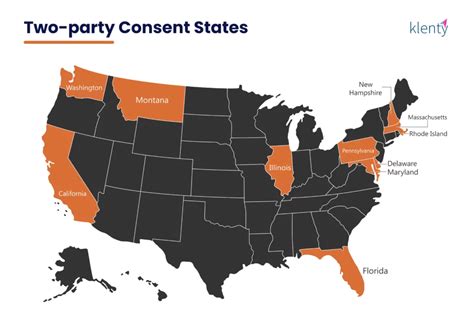
Federal law sets the floor: under the Wiretap Act (18 U.S.C. § 2511), a recording is legal if at least one person in the conversation consents, and that person can be the one wearing the device. States can and do require more. As of 2025, thirteen states require every participant’s consent: California, Connecticut, Delaware, Florida, Illinois, Maryland, Massachusetts, Michigan (where the law is described as unsettled), Montana, Nevada, New Hampshire, Pennsylvania, and Washington (ReedSmith). None of the wearables in this guide ask permission before they start recording; that responsibility sits with the wearer.
| Rule | Who it covers | What it means for a wearer |
|---|---|---|
| Federal one-party consent (Wiretap Act) | All 50 states, as a floor | You can legally record a conversation you’re part of, with no notice to anyone else |
| State all-party consent (about 13 states) | California, Illinois, Florida, and others listed above | Recording someone without telling them can be a criminal offense, not just a civil matter |
| Interstate calls | Any call crossing state lines | Courts generally apply whichever state’s law is stricter |
The strictest state’s rule applies whenever a conversation crosses state lines, so a wearable that’s fine to use at home isn’t automatically fine on a business trip.
Is it even legal to wear one of these around other people?It depends on where the other person is, not where you are. If either of you is in an all-party consent state, you need their agreement before recording, regardless of what your own state allows.
Where these devices fail
| Category | Common failure | What it means for the buyer |
|---|---|---|
| Recording wearables | Core feature requires live servers | The Humane AI Pin’s Feb 2025 shutdown bricked every unit overnight |
| Recording wearables | Vendor abandons the product line | Amazon discontinued its own earlier wearable, Halo, in 2023 |
| Smart glasses | Recording indicator can be defeated | A cheap mod kit disables the LED meant to warn bystanders |
| Smart glasses | Undisclosed feature rollout | Facial-recognition code shipped to millions of devices before the feature was announced |
| Health rings | Core function is subscription-gated | The hardware keeps sensing, but the interpretation that makes the data useful requires an active membership |
None of these failures show up on a spec sheet, and none of them are the kind of thing a thirty-second unboxing video reveals.
What happens to my device if the company gets acquired or shuts down?It depends entirely on whether the core function needs a live server. Locally processed features, such as Plaud’s raw recording or Oura’s raw sensor data, keep working. Cloud-dependent features, such as AI summaries or live scoring, stop the moment the company turns off its servers, as happened with the Humane AI Pin.
Can your phone already do this?
| Category | What a phone already does | What the gadget adds |
|---|---|---|
| Recording wearables | Voice Memos, Otter.ai, and similar apps record and transcribe | Hands-free capture without unlocking a phone; longer standby without draining a primary device’s battery |
| Smart glasses | A phone camera takes sharper photos in most conditions | Point-of-view capture and hands-free voice queries while doing something else with your hands |
| Health rings | A phone-paired watch tracks steps and heart rate | Continuous overnight wear a watch’s charging cycle usually interrupts |
Across all three categories, the honest answer settles the same way: none of these gadgets do something a phone is technically incapable of, they just remove the friction of unlocking, opening an app, or remembering to charge a second device overnight.
Who should buy one, and who shouldn’t
- Recording wearable: worth it if you’re in three or more in-person meetings a week and would otherwise write notes up after the fact.
- Smart glasses: worth it if hands-free photo or video capture during an activity, not casual snapshots, is the actual use case. If it’s mainly about the AI assistant, a phone already does most of that.
- Health ring: worth it if you’ll check the daily scores often enough to justify the annual fee. If a fitness app’s dashboard has gone unopened before, that pattern tends to repeat.
- Any of the three: before paying, check how long the company has supported its current hardware generation. A new device from a company with no track record carries the same risk the Humane AI Pin’s buyers found out about the hard way.
Will my phone make this gadget pointless in a year?For smart glasses, unlikely soon: cameras built into glasses do something a phone in a pocket can’t. For recording wearables and health rings, the risk is real if a phone’s own AI features catch up on transcription or sleep tracking, since the gadget’s main edge is convenience, not a unique capability.