Why these systems never got swapped for something newer

The obvious question is why an organization would keep feeding 1.44-megabyte disks into a machine when a USB drive holds a million times more data for a few dollars. The answer in every confirmed case has little to do with the floppy drive itself. It’s the software and certification built around that drive that costs money to replace.
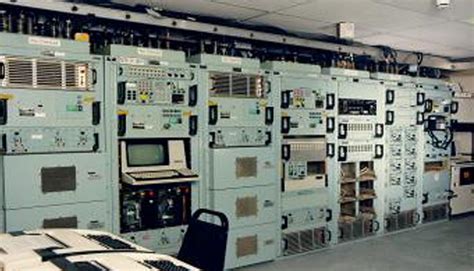
When the U.S. Air Force finally retired the floppy disks in its Strategic Automated Command and Control System (SACCS) in June 2019, the drives themselves were a minor line item. The Government Accountability Office had already put the system’s fiscal year 2016 operating cost at $5.6 million for 175 users, with a lifecycle cost approaching $135 million and a planned $60 million full-system replacement, because everything downstream of the storage medium, the software, the interfaces, and the operator training, had to be re-validated together rather than swapped piece by piece (Task & Purpose).
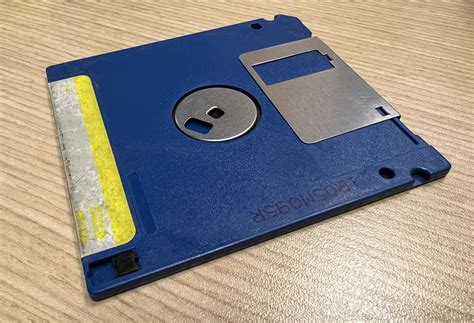
Aviation shows the same pattern on a smaller scale. On a British Airways Boeing 747-400 inspected by the security firm Pen Test Partners after the airline retired its fleet in 2020, the aircraft’s navigation database loader still ran on a 3.5-inch floppy disk that an engineer had to update by hand every 28 days (TechSpot). Replacing that loader is not a parts swap. Any new hardware touching flight-critical navigation data goes through the same certification process the original system did decades earlier, and for an aircraft type nearing the end of its service life, airlines have generally judged that cost isn’t worth carrying for the years of service left.
Is it illegal to keep using floppy disks in aviation or air traffic control?No. Federal certification rules govern the safety of the equipment and software involved, not the specific storage medium, so a floppy-based navigation loader or ATC terminal stays legal to operate as long as it still passes the certification it was originally issued under. The FAA’s stated 2025 modernization goal is to retire the format because replacement parts and trained technicians are running out, not because continued use is unlawful (KPBS).
Where floppy disks are still doing real work
Four sectors account for nearly every confirmed, current floppy-disk dependency: urban rail signaling, commercial aviation, air traffic control, and industrial manufacturing equipment built around 1.44-megabyte floppy interfaces.
| Sector | Specific system | Format | Status as of 2026 | Source |
|---|---|---|---|---|
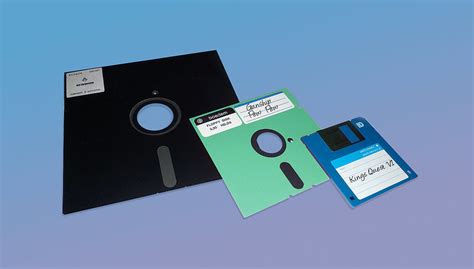
| Urban rail signaling | San Francisco Muni Metro Automatic Train Control System, installed 1998 | 5.25-inch | Active; $212M Hitachi Rail contract signed October 2024; floppy/cable replacement targeted 2027 to 2028; full modernization targeted 2033 to 2034 | Railway Track & Structures, Tom’s Hardware |
| Commercial aviation | Navigation database loader, Boeing 747-400 (confirmed on a retired British Airways aircraft) | 3.5-inch | Tied to the aircraft’s service life; British Airways retired its 747-400 fleet in 2020 | TechSpot |
| Air traffic control | FAA terminal and legacy systems (agency-wide, unspecified count) | Not disclosed | Active as of June 2025; FAA’s acting administrator stated the modernization goal to Congress as “no more floppy disks or paper strips” | KPBS |
| Industrial and textile manufacturing | Embroidery, knitting, and label-weaving machines built around 1.44MB floppy interfaces | 3.5-inch | Active; aftermarket vendors build floppy-to-USB emulators specifically for this equipment class | GoTEK SFR1M44-U100 listing |
| Nuclear command and control (historical) | U.S. Strategic Automated Command and Control System, IBM Series/1 | 8-inch | Ended June 2019 | Task & Purpose |
Every row above shares one trait beyond age: the equipment predates commodity USB storage by a decade or more, and swapping the drive means re-validating everything the drive feeds into.
The San Francisco Municipal Transportation Agency has occasionally turned that fragility into a small point of pride. When the July 2024 CrowdStrike software update crashed computer systems worldwide, including at United Airlines and Delta, a Muni spokesperson told the New York Times the agency’s floppy-disk-based signaling system was untouched, adding, “Long live floppy disks, I guess!” (SFist)
Did floppy disks cause the Newark air traffic control blackout?That specific causal claim hasn’t been confirmed by an FAA or NTSB finding. It comes from a Bloomberg Opinion column arguing that aging infrastructure broadly, floppy disks included, reflects decades of underinvestment in air traffic control (Bloomberg Opinion). The blackout itself has been attributed to a failed data connection, a separate issue from the storage format debate.
What’s keeping the last supply alive
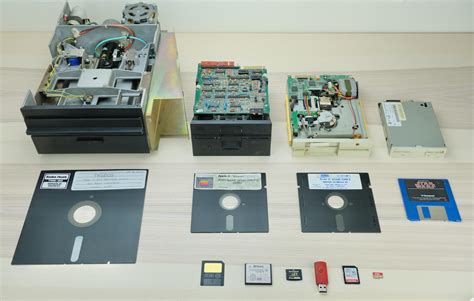
No company has manufactured new floppy disks since Sony ended production in 2011. The remaining global supply comes from decades-old manufacturer stock, sold almost entirely through one surviving retailer: floppydisk.com, which as of July 2026 still lists new 3.5-inch disks starting at $10 for a 10-pack, up to $59.95 to $69.95 for a 50-pack of disks freshly formatted in 2025. Every disk sold today is either old stock or a disk that has already been used once and reformatted.
Can I still buy new floppy disks in 2026?Yes, but nothing has been newly manufactured since 2011. floppydisk.com sells surplus stock and reformatted recycled disks; its mid-2026 listings ranged from $10 for a 10-pack to roughly $60 to $70 for a 50-pack, with no new production anywhere in the world since Sony exited the business.
The USB workaround, and why it isn’t automatic
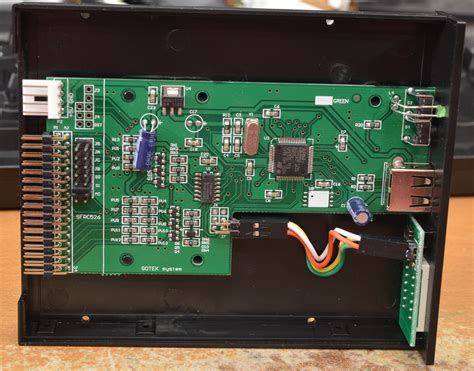
A hardware category exists specifically to get old equipment off floppy disks without touching the software that depends on them. Devices built around the Gotek drive mechanism, running either the manufacturer’s default firmware or the open-source FlashFloppy project, plug into the same 34-pin floppy interface and present a USB flash drive to the host machine as if it were a floppy disk. Listings for the common SFR1M44-U100 model price the hardware between roughly $20 and $40 depending on retailer and bundled extras (eBay, AliExpress).
The catch is compatibility, not price. The stock firmware only recognizes a USB drive formatted as FAT12, matching the 1.44-megabyte, 80-track, 18-sector-per-track layout the original floppy controller expects; machines built for Amiga, Atari, or other non-PC formats need the emulator reflashed with FlashFloppy or an equivalent firmware first. Getting a Gotek-class emulator working generally requires:
- A compatible interface. The original drive connector must be a standard 34-pin Shugart-style header.
- The right firmware. PC and DOS equipment usually works with the stock firmware; Amiga, Atari, and most electronic instruments need FlashFloppy or HxC firmware instead.
- A correctly formatted USB drive. The flash drive must be formatted to match the firmware’s expected file system and the original floppy’s track and sector layout.
That formatting requirement is why a general-purpose emulator can’t simply be dropped into a certified aviation or transit system: the emulator changes the storage medium, but the data path the certified software reads from still counts as a change that has to go back through certification.
Will a USB floppy emulator work with any old floppy-based machine?Only if the machine uses a standard 34-pin floppy interface and the emulator is flashed with firmware matching that machine’s format. Stock Gotek firmware handles PC-style 1.44MB FAT12 disks; Amiga, Atari, and most electronic instruments need the emulator reflashed with FlashFloppy or HxC firmware first, and certified systems such as aircraft avionics can’t legally accept a substitution like this without going through recertification.
The sunset timeline
| System / institution | Floppy dependency | Ended or targeted end | Source |
|---|---|---|---|
| U.S. nuclear command and control (SACCS) | 8-inch floppy disks, IBM Series/1 | Ended June 2019 | Task & Purpose |
| Japanese government administrative systems | 1,034 regulations requiring floppy or CD submission | Ended June 28, 2024 | U.S. News / Reuters |
| British Airways Boeing 747-400 fleet | 3.5-inch navigation database loader | Ended with fleet retirement in 2020 | TechSpot |
| San Francisco Muni Metro ATCS | 5.25-inch floppy disks, loaded daily | Floppy/cable phase targeted 2027 to 2028; full modernization 2033 to 2034 | Railway Track & Structures |
| U.S. air traffic control (FAA) | Floppy disks and paper flight strips in parts of the system | No firm date; stated goal only as of June 2025 | KPBS |
Government and regulated-industry holdouts move on multi-year schedules: Japan’s deregulation drive still took roughly two years to complete once started in earnest, and Muni Metro’s full overhaul spans nearly a decade from contract signing to completion.
Signs you’re the one still managing a floppy-dependent system
If you’re responsible for equipment built between the late 1980s and late 1990s, a few concrete signs indicate genuine floppy dependency rather than simply old hardware:
- The controller only accepts FAT12-formatted media. This is the same format Gotek’s stock firmware expects, a sign the system predates FAT16/FAT32 support.
- The physical connector is a 34-pin ribbon header. That’s the standard Shugart-style floppy interface used across PC, embroidery, and musical equipment.
- The equipment vendor sells a floppy emulator as a direct drive replacement. That’s itself a market signal that original drives are no longer supplied.
- Firmware or program updates ship on physical media with no network path. Systems designed before ubiquitous networking often have no other built-in update mechanism.
Do floppy disks still work after 30 or 40 years?Inconsistently. The iron-oxide magnetic coating degrades over time, faster with heat, humidity, or mold exposure. Leontien Talboom, a technical analyst at Cambridge University Libraries and Archives who works on the university’s floppy-disk collection, says the bigger practical risk by 2026 is disappearing expertise: the people who know how to read obsolete disk formats are retiring faster than the disks themselves are failing (IEEE Spectrum).
Who else is buying floppy disks
Not every current floppy-disk buyer is running a subway or an airline. floppydisk.com’s product lineup includes packs aimed at collectors and retro-computing hobbyists alongside stock aimed at industrial buyers, with blank disks marketed for reuse in vintage Macintosh and Amiga systems sitting on the same site as the 1.44-megabyte industrial stock. Sony’s 2011 exit ended new manufacturing years after the mainstream consumer market had already collapsed; what’s kept a retail storefront alive since then is this mix of a shrinking industrial base and a small, persistent hobbyist one.