Why the 1970s Produced a Wave of New Technology
Two forces converged. The first was the falling price of computation. Intel released the 4004 on the first single-chip microprocessor on November 15, 1971, at $60 a chip, packing 2,300 transistors onto one piece of silicon for the first time. Once that level of logic could be bought for the price of a nice dinner, calculator makers, camera makers, and eventually phone makers began redesigning their products around it within a few years.
The second force was government-funded infrastructure that took years to reach ordinary people. ARPANET, the Defense Department research network, carried Ray Tomlinson’s first message between two separate computers in 1971. The Air Force’s NAVSTAR satellite navigation program, later known as GPS, launched its first satellite in February 1978. Both systems were built and tested through the decade as military or academic projects; neither one was something a consumer could use in the 1970s.
Invented in the 1970s, But Not Available Until Later
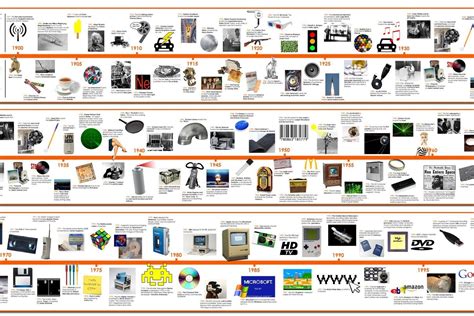
A technology invented in the 1970s and a technology you could buy in the 1970s are frequently two different dates, sometimes by a decade or more.
| Technology | Invented | Available to the public | Gap |
|---|---|---|---|
| Cellular telephone | April 1973 (first handheld call) | 1983 to 1984 (Motorola DynaTAC 8000X, $3,995) | About 10 to 11 years |
| GPS navigation | 1973 (program approved), February 1978 (first satellite) | May 2000 (Selective Availability turned off; before that, civilian signals were deliberately degraded to about 100 meters of accuracy) | About 22 to 27 years |
| Adhesive note (Post-it) | 1968 (adhesive), 1974 (bookmark application) | April 1980 (national launch) | 6 to 12 years |
| Digital camera | 1975 (Kodak prototype) | Early 1990s (first consumer models) | About 15 to 20 years |
The mobile phone and GPS rows tell the same story from different starting points: both were demonstrated in the early-to-mid 1970s, and both spent one to two decades as prototypes or restricted military systems before an ordinary person could buy or fully use one.
Computing and Data Storage
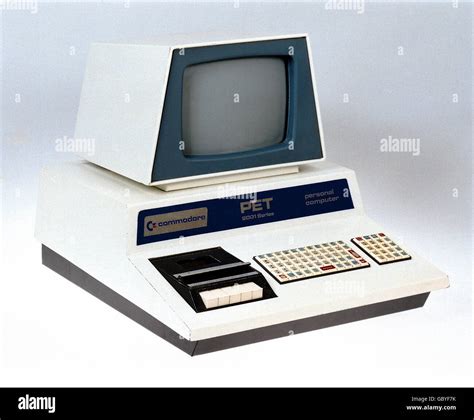
The microprocessor is the one 1970s invention with no such gap. Intel sold the 4004 to any engineer who wanted one starting the same week it was announced. The design team signed their work directly: Federico Faggin’s initials, F.F., remain etched into a corner of the original 4004 die held today at the Computer History Museum.
IBM began selling 8-inch floppy disk drives in 1971, giving mainframe operators a way to load software without punched cards. Apple built on both developments with the Apple II in 1977, and Steve Wozniak’s disk drive for it, released the following year, used a simpler, cheaper design than IBM’s original approach.
Communications
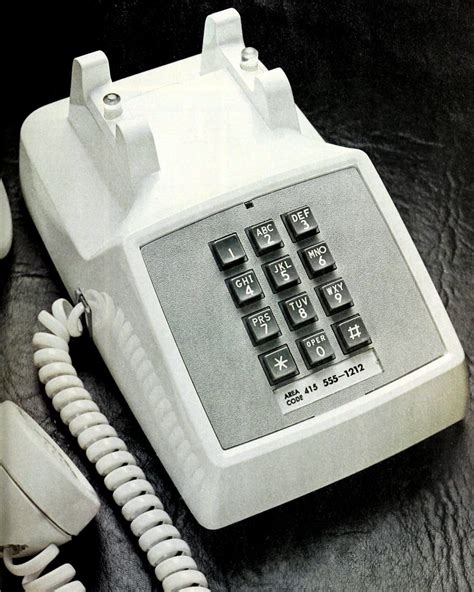
The cellular telephone illustrates the invented-versus-available gap most starkly. Motorola engineer Martin Cooper made the first handheld cellular call on April 3, 1973, notifying a rival at Bell Labs that Motorola had gotten there first. The commercial version, the DynaTAC 8000X, didn’t receive FCC approval until September 21, 1983, and didn’t reach store shelves until 1984, priced at $3,995.
Could you buy a mobile phone in the 1970s?No. The 1973 call used a hand-built prototype. Motorola’s first commercial handset, the DynaTAC 8000X, went on sale in 1984 for $3,995, roughly $12,800 in 2025 dollars.
GPS followed a similar arc from a different starting point: a military program approved in 1973 that would not offer full civilian accuracy until Selective Availability was switched off in 2000, as the table above shows.
Email’s origin is genuinely contested, though not on equal footing. Ray Tomlinson, an engineer at Bolt Beranek and Newman, sent the first message between two separate ARPANET-connected computers in 1971 and introduced the @ symbol for addressing. A different claim traces to 1978, when a 14-year-old contractor built a program called EMAIL for a New Jersey medical school and received a federal copyright for the code in 1982. The Smithsonian and the Washington Post both later issued corrections clarifying that the copyright covers a specific program, not the invention of electronic messaging itself.
Who invented email?Ray Tomlinson, in 1971, sending the first message between separate networked computers. A 1978 program called EMAIL is sometimes credited instead, but the Smithsonian and multiple technology historians have said that credit is mistaken; the 1978 program’s author holds a copyright on his own code, not on the concept.
Home and Consumer Tech
The Post-it Note has a longer and less tidy history than most retellings suggest. 3M chemist Spencer Silver invented the underlying low-tack adhesive in 1968 while trying to build something stronger. Colleague Art Fry found a use for it as a hymnal bookmark in 1974. The product was test-marketed as “Press ‘n Peel” in four cities in 1977 with disappointing results, and it only became the Post-it Note in a national launch on April 6, 1980, twelve years after the adhesive itself was discovered.
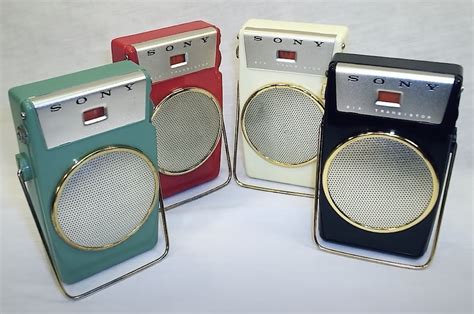
The Sony Walkman launched in 1979, giving portable cassette playback a mainstream audience for the first time. Erno Rubik, a Hungarian architecture professor, invented his cube in 1974 as a teaching tool for three-dimensional movement.
Medicine and Science

Magnetic resonance imaging began with a 1971 paper. Physician Raymond Damadian published research in Science showing that cancerous and healthy tissue produce different magnetic resonance signals, then filed a patent on a scanning method in 1972. Paul Lauterbur produced the first magnetic resonance image of a living subject in 1973 and, with Peter Mansfield, developed the techniques that turned the concept into a usable clinical scanner. The 2003 Nobel Prize in Physiology or Medicine went to Lauterbur and Mansfield. Damadian was excluded, and several published analyses of the decision have called the omission deliberate.
Who really invented MRI?Raymond Damadian published the priority research in 1971 and patented a scanning method in 1972. Paul Lauterbur and Peter Mansfield developed the practical imaging techniques and won the 2003 Nobel Prize for it. Damadian was left off the prize, a choice the Nobel Foundation’s internal records will not become public until 2053.
Commonly Misdated “1970s” Inventions

Several technologies that regularly turn up on “1970s inventions” lists were built in the following decade instead.
| Claimed as 1970s | Actual year and event | Why the confusion |
|---|---|---|
| Compact disc | August 17, 1982: Philips presses the first CD at its Langenhagen plant | The CD’s technical standard was finalized in 1980 and grew directly out of 1970s LaserDisc research, so the underlying work and the finished product get merged in retellings |
| Artificial heart | December 1982: Barney Clark receives the Jarvik-7, the first permanent artificial heart implant | Earlier, temporary heart devices from the 1960s get folded into the same story as the Jarvik-7 |
| Space Shuttle | April 1981: Columbia’s first flight, STS-1 | The program was approved and built through the 1970s, so lists sometimes credit the decade of development rather than the decade of first flight |
All three cases follow the same pattern: development spanned the 1970s, but the object a consumer or the public actually saw did not exist until 1981 or 1982.
Was the CD a 1970s invention?No. Philips pressed the first physical compact disc on August 17, 1982, four years after LaserDisc reached the market and using much of the same optical-disc research.
1970s Tech That Didn’t Survive
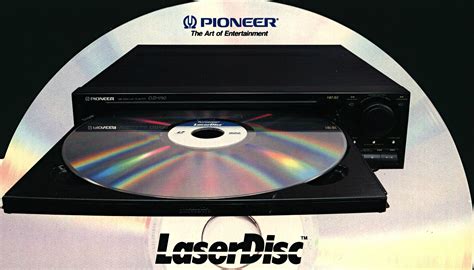
MCA introduced the optical videodisc format under the name DiscoVision on December 11, 1978, in a single test market in Atlanta. The player cost $700, and the discs offered sharper picture and sound than any videotape on the market. It could not record television, though, a gap that mattered once home taping caught on. Pioneer took over marketing in 1980 and renamed it LaserDisc, but it never grew past a niche audience of collectors in North America.
What 1970s Technology Cost Then vs. Now
| Item | Year | Original price | 2025-equivalent |
|---|---|---|---|
| Intel 4004 microprocessor | 1971 | $60 | About $477 |
| MCA DiscoVision (LaserDisc) player | 1978 | $700 | About $2,300 |
| Motorola DynaTAC 8000X | 1983 to 1984 | $3,995 | About $12,800 |
The DynaTAC’s price gap dwarfs the other two: at $3,995 in 1984, buying the phone cost roughly 1,192 hours of work at the era’s $3.35 federal minimum wage, more than seven months of full-time labor before taxes.
Which 1970s technology had the biggest long-term impact?The microprocessor. Nearly every digital device built since 1971, from calculators to phones to cars, descends from the single-chip design Intel sold for $60 in the 4004.